Live Updates: The Transit of Venus

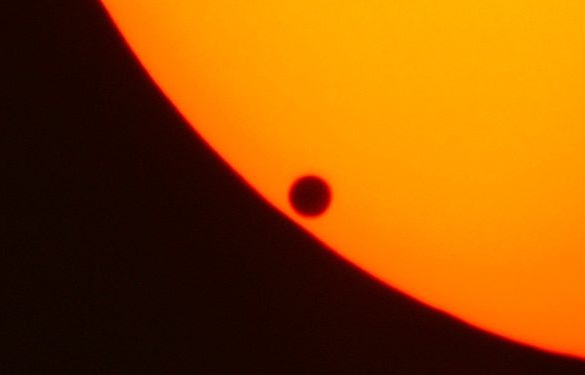
6:04-Venus has just begun to touch the farthest edge of the Sun.

6:10-You can just barely make out the half of Venus that is over the upper right corner.

6:22-Venus is now completely covering its little part of the Sun as it continues to sail across its surface.

6:27-Clouds and some rain have come into the area. Hopefully it will clear, but either way we got to see the transit and it won’t happen again for 105 years!

Don’t Miss The Transit of Venus on June 5th

Image

THE EVENT
Around Six-Thirty on Tuesday, June 5th an event will occur that has not been seen for eight years and will not be view-able again in our life time, the transit of Venus across the Sun. From our vantage point, Venus will appear to sail across the surface of the Sun, leaving a very small, nearly pinpoint sized, hole on its surface. Making this event all the more exciting is the fact that this will not occur for another 100 year, so unless you are an infant or Larry King, you are not likely to see this again!

USE PROTECTION
As with any solar viewing, using proper and certified protective filters and glasses is required to insure there is no eye damage that would likely be permanent. The best and cheapest way to view this transit comes from a company called “Rainbow Symphony” who have solar viewing glasses that block out all harmful ultra-violet and infrared radiation from the Sun.

Come Together
As I’ve always said, the best way to enjoy astronomy is to do it with others! Invite some friends over, lend them your protective glasses and give them a taste of the excitement. Simple out reach like this can go a long way to educating the public  and raising interest in astronomy as a whole.

Additional Links
NASA Coverage 
SPACE.com Coverage
ASTRONOMY.com Coverage

The Return of Big Red

“Guess who’s back, back again. Big Red’s back, tell a friend!”
Eminem-February, 2012

(Referencing the orbital cycle that bring Mars and Earth near each other for incredible views every two years)

Good ole Slim Shady has it right once again. If you are into planetary observing, now is the time to pull out the long johns, put in the hand warmers and take out the scope as Mars returns for some spectacular views over the next couple weeks.

Every two years the orbital gods bring Earth between the Sun and Mars making the two planets closer together. This is known as an opposition. It is at this point every two years that amateur astronomers get their best views of our red headed neighbor. The last opposition of Mars and Earth occurred in early 2010 as I noted during one of my first blog posts on March 19, 2010.

Now, nearly two years later, with a clear night presenting itself  just prior to one of our only snow storms of the season thus far, I went out and took a long awaited view of Mars.  Using a 6mm eyepiece showing 200X magnification, the polar ice cap popped out as a bright white feature on the northern most tip of the planet. As the atmosphere would occasionally settle down, sharp views occasionally stabilized revealing some fine detailed land features in the extreme Southern hemisphere. This is where patience pays off in astronomy, particularly for planetary observing. One or two seconds of sharpness can provide some of the best memories from an evening out.

I’m hoping for a couple more nights of observing before Mars and Earth quickly begin to move away from each other starting in mid March. As Mars rotates, it shows a different side of itself to Earth every night; land features such as Sytris Major and Terra Meridian will show up as dark defined regions at 200X magnification. If you are interested in planetary observing now is the time to see Mars, it won’t be at this close distance to Earth for another two years and with the Mayan 2012 calendar coming to an end this upcoming December there is definitely no time like the present to observe our closest planetary neighbor.

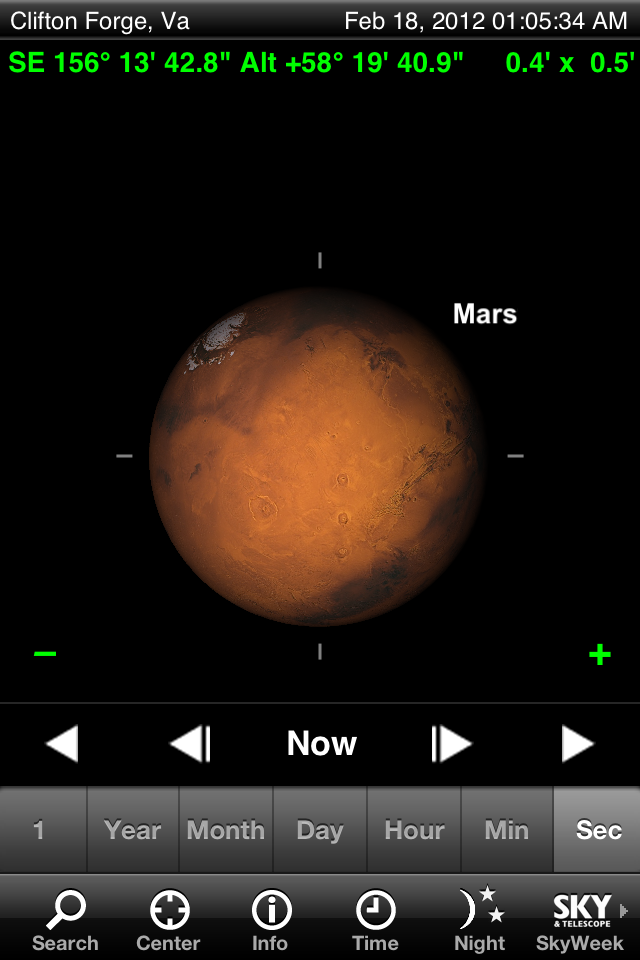
This image from the iPhone’s SkySafari app shows a zoomed in view of Mars at the time of observing.

Star Log: February 18th, 2012

The Summer of Clouds

With the fall air turning ever so colder, I thought it would be a good time do an overview of how my “summer of astronomy” went. Being a teacher, I was looking forward to June, July and August to provide me with some late night observation opportunities. While, there were some nice and clear nights throughout those 3 months, I was surprised at how cloudy it was during most evenings and nights. Even though there were not as many opportunities to go out this summer as I had hoped, there was one object in particular that I was very excited to observe, and the summer months did allow me some great views of it.

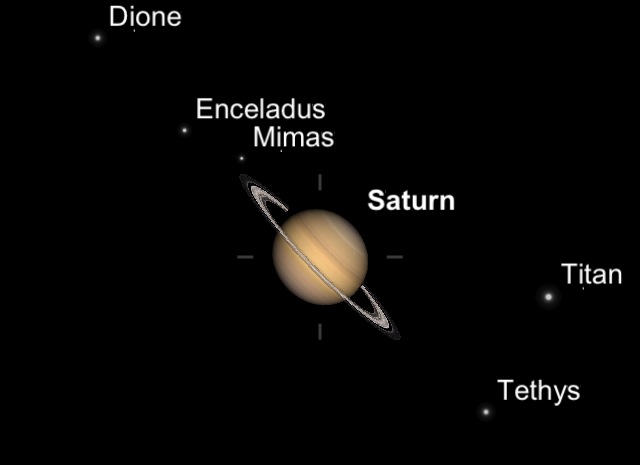
Saturn is probably my favorite object to view, so using the new 6mm Zhumell eyepiece at 200x magnification on it over the summer was quite a treat. As opposed to last year, where Saturn’s rings were head on with Earth providing a less than spectacular showing, this year they appeared much more tilted from our perspective as part of Saturn’s 29 year orbit around the Sun. This will continue to provide memorable views and glimpses of the famous Casini divide over the next 10 years. As was pointed out in my review of the Zhumell 6mm Planetary Eyepiece, the views provided from it were sharp and detailed from edge to edge providing the best sights of Saturn I have seen to date from my telescope.

While the Summer of 2011 was a bit of a disappointment overall, there were still several times when I was able to take out the telescope for some good viewings. This just goes to show that it is always a good idea to take advantage of the clear nights you are given, because you never know when another one will come along again.

Shuttle Atlantis Cleared For Landing

Nearing completion of its historic last mission, the Space Shuttle Atlantis is schedule for wheels down around 5:56am Thursday morning at Cape Canaveral. With the Space Station resupplied, Atlantis undocked on July 19th for its return journey home.

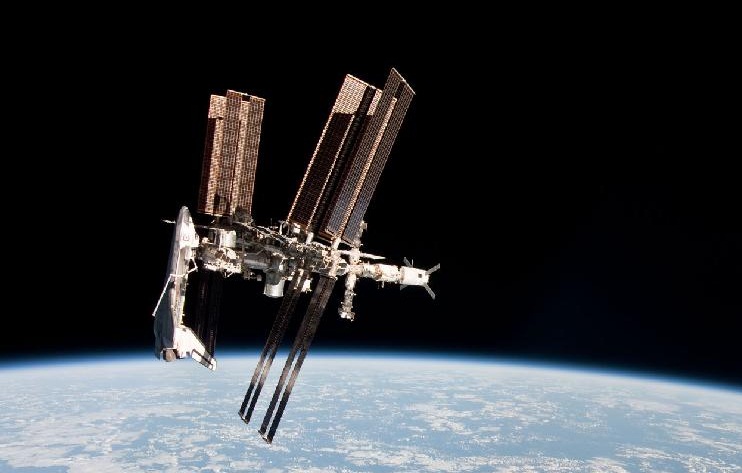
During its mission the crew of a Russian Soyuz Space Craft, leaving the ISS, took this rare picture of the Space Shuttle docked with the Space Station.

Be sure to catch live coverage of the Shuttle’s return to Earth tomorrow morning. Sadly, I’ve checked the Space Shuttle tracking websites and it appears the shuttle will be to low on the horizon to view from my vantage point in Virginia. Be sure to double check where you live, this will be the last time to see the “star” of the Space Shuttle fly over.
Space Station and Shuttle Fly Over Website 

30 Years Since Liftoff: A Reflection on the Space Shuttle Program

On April 12th 1981, John Young and Robert Crippen made history as the first Americans to pilot Columbia STS-1, the first orbital flight of the newly minted NASA Space Shuttle Fleet. Now, over 30 years later, the era of the Space Shuttle is coming to an end on July 8, with the 11:26am launch of STS-135.

As important as the Space Shuttle Program has been over the past 30 years, there has never quite been the excitement or following for this program as there was for the Mercury, Gemini and Apollo missions of the 60’s and early 70’s. There are some important reasons for this, the most major one being the correlation of the Space Race with the Cold War. Take the Russians out of the equation and the sense of competition and want of superiority would not have translated into the same level of exploration, which culminated with Neil Armstrong, Buzz Aldrin and Michael Collin’s Apollo 11 landing on the Moon in 1969.

With the Apollo era finishing up in the early 1970’s, NASA made an interesting and controversial decision to move its attention from Lunar to low Earth orbital missions. One of the main reasons for this was cost. With the Apollo era ending abruptly from a lack of congressional funding, the thought was to create a lower cost, reusable space craft that could continue the path of exploration set forth by Apollo but at a much reduced price tag to US tax payers. Thus, the Space Shuttle Program was born.

Since that first launch back in 1981, the Shuttle Program has seen its share of triumphs and tragedies. In terms of scientific triumphs, its launching of the Hubble Space Telescope in 1990 has opened the worlds eyes to the elegance and complexities of our universe, inspiring young people to study the sciences and allowing us a little bit of perspective as to our place in the vast cosmos. In terms of exploration, it has led to the creation of the International Space Station, which continues to test the human ability to adapt and live in extreme circumstances along with the complex scientific experiments that occur there on a daily basis. However, with all of these triumphs, we cannot forget the loss of the 14 crew members of the Space Shuttle Challenger and Space Shuttle Columbia who gave their lives for the betterment of mankind and the exploration of the final frontier. These two disasters and the flaws in the Space Shuttle Program that they revealed will always be mentioned at the forefront of retrospectives dealing with this era of NASA history.

With over a billion dollars in cost for most Shuttle launches and the tragic failures of the Challenger and Columbia missions, some raise the question as to whether the Shuttle Program was worth it? While the excitement of the Space Shuttle may never have matched that of NASA’s early days, the doors of scientific and human exploration that have been opened over the past 30 years have been tremendous.  While the Space Shuttle may be a low Earth orbiting space craft, the scientific instruments it has brought into space have opened our eyes to the greater wonders of the universe in a way that the Gemini, Mercury, or even Apollo missions could not.

Viewing Super Nova Remnants and Nebulae, “Oh, was that Dim Fuzzy Cloud it”

Supernova Remnants and Planetary Nebula can be a disappointment for most casual observers. It’s a lot more difficult to wow people with the faint glow of a cloud like object than it is to show the bright and detailed craters of the Moon or the rings of Saturn. For me, viewing these “faint fuzzies” is more about the challenge of finding them and the story they tell. What is the story behind the creation of the Veil Nebula? How far do I star hop to find M27, the Dumbbell Nebula?  On this night, I turned my attention to these types of objects and enjoyed the sights and stories they provided.

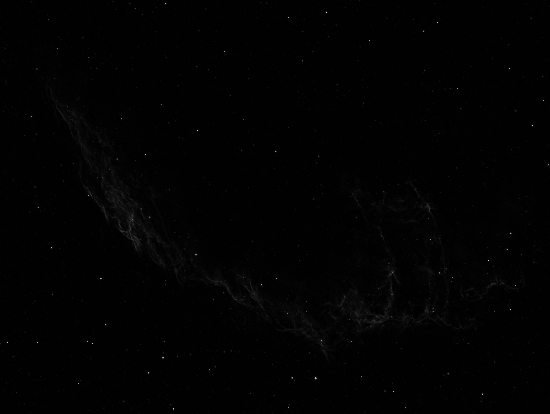
The Eastern Veil Nebula
This ghostly figure is all that remains of a dead star’s super nova. Some 5 to 8 thousand years ago the dying star exploded and flung its gasses into the far reaches of space.  The stretched out Veil Nebula is what we see of those remnants, today. Star hoping from Deneb down to Gienah, I found the Eastern portion of the Veil Nebula. It’s ghostly appearance is easy to miss unless you knew what you are looking for. The large 2 degrees of view provided by my 2in. 38mm Q70 Orion Eyepiece provided enough room to fit all of this portion of the nebula in sight. Having an O-III filter for my eyepiece would have greatly helped with this particular Nebula because of the type of light waves it sends out.

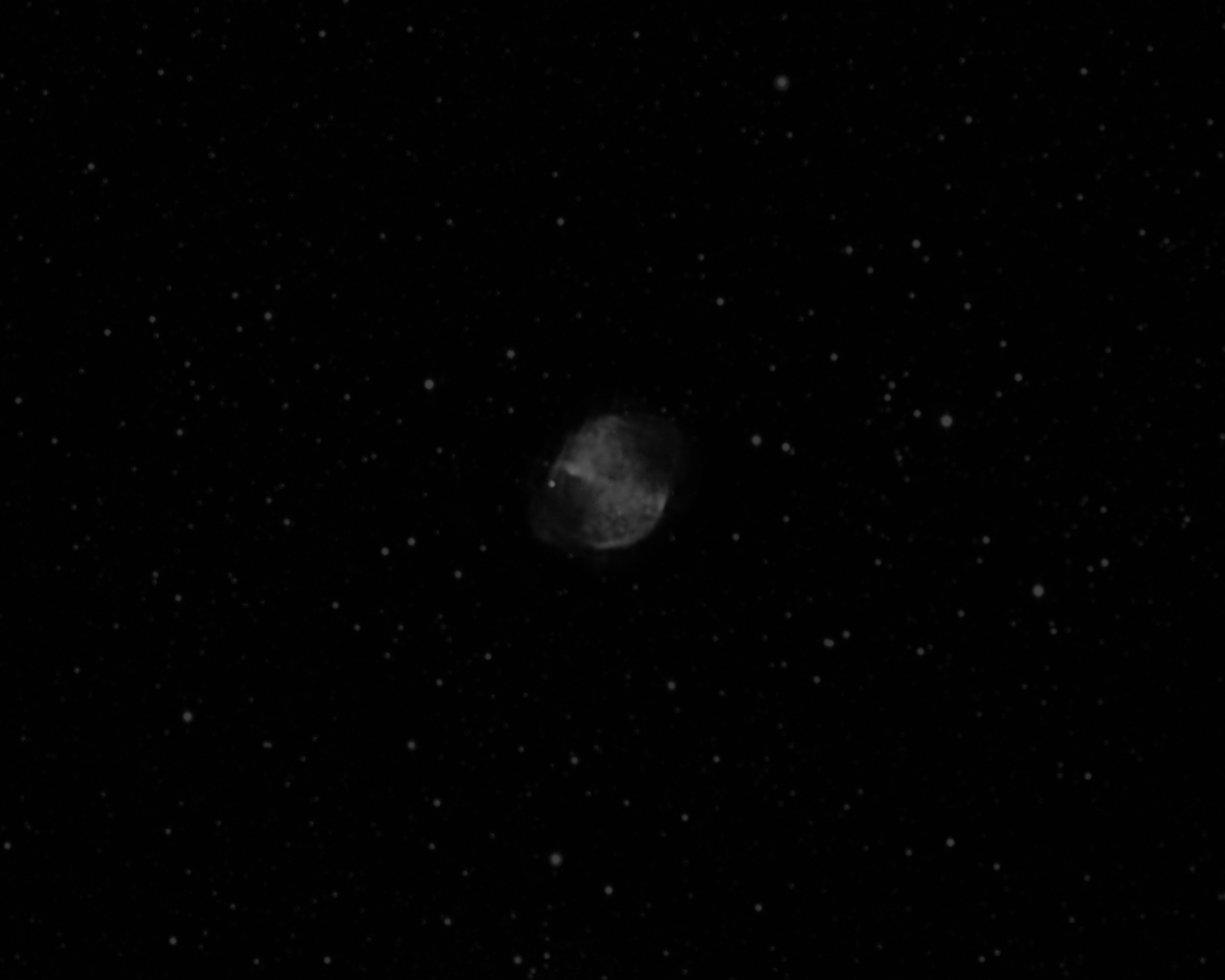
The Dumbbell Nebula

It’s easy to understand why this planetary nebula in the Vulpecula Constellation was the first of its kind to be discovered. Scanning the skies and coming upon it on purpose or accidentally, leaves little doubt that this is something unique. When certain sized stars near the end of their life they eject out layers of gases which create the amazing views of a planetary nebula. With a magnitude of 7.5, it is easily visible and displays a slight grayish blue hue.

Think about this next time you view these or other deep sky objects. The distance from Earth to the Dumbbell Nebula is roughly 1,360 light years. Meaning that, when the light we see today through our telescopes left the Dumbbell Nebula it was the year 651 on Earth. Looking at these distant objects turns a telescope into a time machine peering back in time over thousands, hundreds of thousands and even millions of years. While deep sky objects may not always “wow” like the planets, the journey to find them and stories they tell make them a sight to be hold.

Starlog: June 30, 2011 and July 1, 2011

Planetary Observing Tips

Planets are the reason I wanted a telescope as a kid. My first views of Saturn and Jupiter came at a very young age. I was amazed at being able to see cloud patterns on Jupiter and splits in the rings of Saturn. To this day, Saturn and Jupiter are my favorite objects to view and show off to others. Due to the higher magnifications needed to view the planets, there are some guidelines that if followed can provide exceptional views of these objects.  Along with this and Saturn being out in full glory for the remainder of the summer, here are some tips for how to best view the planets of the nighttime sky.

1. Make sure the scope has plenty of time to cool down to the outside temperature.  This can range anywhere from one to a couple of hours depending on the size and type of telescope being used. A telescope not cooled will cause turbulence between warm and cool air in the tube, creating poor high magnification images that will not allow fine detail of the planets to come through.

2. Not every night is a good night for viewing planets. A steady atmosphere is crucial for sharp planetary observing. If the wind is blowing and the stars are twinkling (this occurs from atmospheric turbulence) the planets will appear as wavy and washed out images in any scope.

3. Magnification is key to getting details out of the planets. The particular telescope being used is a major factor in how high it can be pushed. However, any scope regardless of aperture is usually limited to around 300x magnification because of atmospheric conditions and how fast the object moves by in the field of view if a tracking motor is not installed. For my 8 in reflector, I have found that 110x and 200x magnifications provide amazing details of Jupiter, Saturn, Mars and the Lunar Surface.(To find your telescopes magnification, divide the focal length of the telescope by the eye piece being used: My Telescope and Eyepiece Combination; 1,200mm/6mm=200x magnification)

When observing with a friend or family member, nothing can compare to the awe and excitement of knowing that some of the stars in the sky are actually planets with detailed cloud formations and ring structures. Using these tips can help ensure the highest quality out of the views provided by our incredible celestial neighbors.