Shuttle Atlantis Cleared For Landing

Nearing completion of its historic last mission, the Space Shuttle Atlantis is schedule for wheels down around 5:56am Thursday morning at Cape Canaveral. With the Space Station resupplied, Atlantis undocked on July 19th for its return journey home.

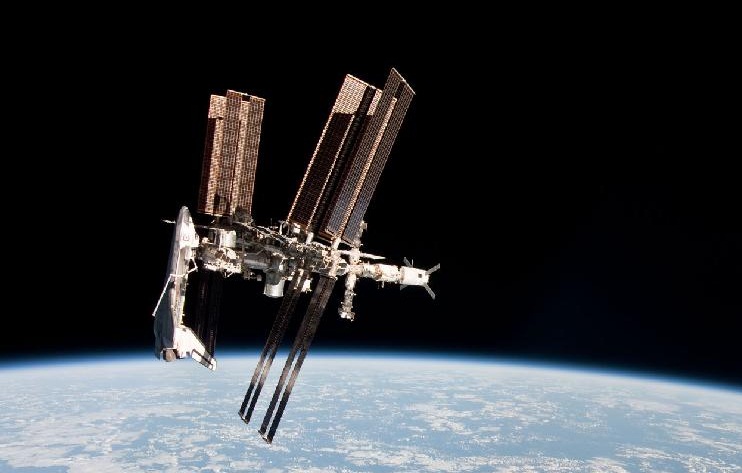
During its mission the crew of a Russian Soyuz Space Craft, leaving the ISS, took this rare picture of the Space Shuttle docked with the Space Station.

Be sure to catch live coverage of the Shuttle’s return to Earth tomorrow morning. Sadly, I’ve checked the Space Shuttle tracking websites and it appears the shuttle will be to low on the horizon to view from my vantage point in Virginia. Be sure to double check where you live, this will be the last time to see the “star” of the Space Shuttle fly over.
Space Station and Shuttle Fly Over Website 

30 Years Since Liftoff: A Reflection on the Space Shuttle Program

On April 12th 1981, John Young and Robert Crippen made history as the first Americans to pilot Columbia STS-1, the first orbital flight of the newly minted NASA Space Shuttle Fleet. Now, over 30 years later, the era of the Space Shuttle is coming to an end on July 8, with the 11:26am launch of STS-135.

As important as the Space Shuttle Program has been over the past 30 years, there has never quite been the excitement or following for this program as there was for the Mercury, Gemini and Apollo missions of the 60’s and early 70’s. There are some important reasons for this, the most major one being the correlation of the Space Race with the Cold War. Take the Russians out of the equation and the sense of competition and want of superiority would not have translated into the same level of exploration, which culminated with Neil Armstrong, Buzz Aldrin and Michael Collin’s Apollo 11 landing on the Moon in 1969.

With the Apollo era finishing up in the early 1970’s, NASA made an interesting and controversial decision to move its attention from Lunar to low Earth orbital missions. One of the main reasons for this was cost. With the Apollo era ending abruptly from a lack of congressional funding, the thought was to create a lower cost, reusable space craft that could continue the path of exploration set forth by Apollo but at a much reduced price tag to US tax payers. Thus, the Space Shuttle Program was born.

Since that first launch back in 1981, the Shuttle Program has seen its share of triumphs and tragedies. In terms of scientific triumphs, its launching of the Hubble Space Telescope in 1990 has opened the worlds eyes to the elegance and complexities of our universe, inspiring young people to study the sciences and allowing us a little bit of perspective as to our place in the vast cosmos. In terms of exploration, it has led to the creation of the International Space Station, which continues to test the human ability to adapt and live in extreme circumstances along with the complex scientific experiments that occur there on a daily basis. However, with all of these triumphs, we cannot forget the loss of the 14 crew members of the Space Shuttle Challenger and Space Shuttle Columbia who gave their lives for the betterment of mankind and the exploration of the final frontier. These two disasters and the flaws in the Space Shuttle Program that they revealed will always be mentioned at the forefront of retrospectives dealing with this era of NASA history.
With over a billion dollars in cost for most Shuttle launches and the tragic failures of the Challenger and Columbia missions, some raise the question as to whether the Shuttle Program was worth it? While the excitement of the Space Shuttle may never have matched that of NASA’s early days, the doors of scientific and human exploration that have been opened over the past 30 years have been tremendous.  While the Space Shuttle may be a low Earth orbiting space craft, the scientific instruments it has brought into space have opened our eyes to the greater wonders of the universe in a way that the Gemini, Mercury, or even Apollo missions could not.

Viewing Super Nova Remnants and Nebulae, “Oh, was that Dim Fuzzy Cloud it”

Supernova Remnants and Planetary Nebula can be a disappointment for most casual observers. It’s a lot more difficult to wow people with the faint glow of a cloud like object than it is to show the bright and detailed craters of the Moon or the rings of Saturn. For me, viewing these “faint fuzzies” is more about the challenge of finding them and the story they tell. What is the story behind the creation of the Veil Nebula? How far do I star hop to find M27, the Dumbbell Nebula?  On this night, I turned my attention to these types of objects and enjoyed the sights and stories they provided.

The Eastern Veil Nebula
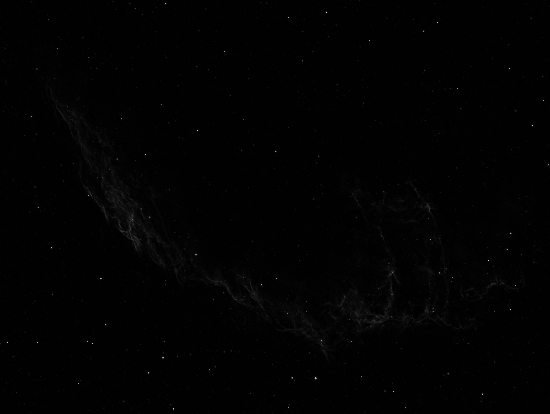
This ghostly figure is all that remains of a dead star’s super nova. Some 5 to 8 thousand years ago the dying star exploded and flung its gasses into the far reaches of space.  The stretched out Veil Nebula is what we see of those remnants, today. Star hoping from Deneb down to Gienah, I found the Eastern portion of the Veil Nebula. It’s ghostly appearance is easy to miss unless you knew what you are looking for. The large 2 degrees of view provided by my 2in. 38mm Q70 Orion Eyepiece provided enough room to fit all of this portion of the nebula in sight. Having an O-III filter for my eyepiece would have greatly helped with this particular Nebula because of the type of light waves it sends out.

The Dumbbell Nebula

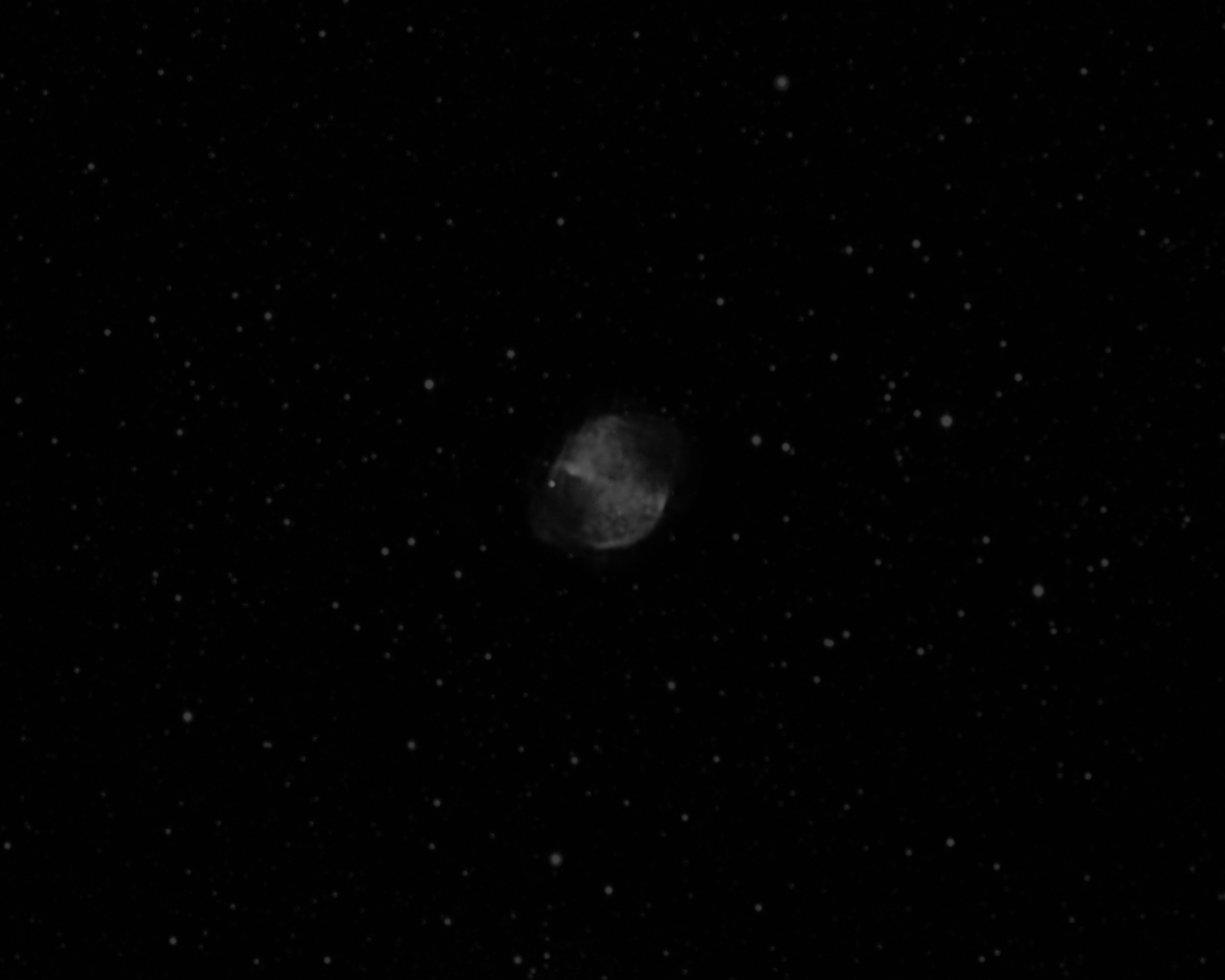
It’s easy to understand why this planetary nebula in the Vulpecula Constellation was the first of its kind to be discovered. Scanning the skies and coming upon it on purpose or accidentally, leaves little doubt that this is something unique. When certain sized stars near the end of their life they eject out layers of gases which create the amazing views of a planetary nebula. With a magnitude of 7.5, it is easily visible and displays a slight grayish blue hue.

Think about this next time you view these or other deep sky objects. The distance from Earth to the Dumbbell Nebula is roughly 1,360 light years. Meaning that, when the light we see today through our telescopes left the Dumbbell Nebula it was the year 651 on Earth. Looking at these distant objects turns a telescope into a time machine peering back in time over thousands, hundreds of thousands and even millions of years. While deep sky objects may not always “wow” like the planets, the journey to find them and stories they tell make them a sight to be hold.

Starlog: June 30, 2011 and July 1, 2011

Planetary Observing Tips

Planets are the reason I wanted a telescope as a kid. My first views of Saturn and Jupiter came at a very young age. I was amazed at being able to see cloud patterns on Jupiter and splits in the rings of Saturn. To this day, Saturn and Jupiter are my favorite objects to view and show off to others. Due to the higher magnifications needed to view the planets, there are some guidelines that if followed can provide exceptional views of these objects.  Along with this and Saturn being out in full glory for the remainder of the summer, here are some tips for how to best view the planets of the nighttime sky.

1. Make sure the scope has plenty of time to cool down to the outside temperature.  This can range anywhere from one to a couple of hours depending on the size and type of telescope being used. A telescope not cooled will cause turbulence between warm and cool air in the tube, creating poor high magnification images that will not allow fine detail of the planets to come through.

2. Not every night is a good night for viewing planets. A steady atmosphere is crucial for sharp planetary observing. If the wind is blowing and the stars are twinkling (this occurs from atmospheric turbulence) the planets will appear as wavy and washed out images in any scope.

3. Magnification is key to getting details out of the planets. The particular telescope being used is a major factor in how high it can be pushed. However, any scope regardless of aperture is usually limited to around 300x magnification because of atmospheric conditions and how fast the object moves by in the field of view if a tracking motor is not installed. For my 8 in reflector, I have found that 110x and 200x magnifications provide amazing details of Jupiter, Saturn, Mars and the Lunar Surface.(To find your telescopes magnification, divide the focal length of the telescope by the eye piece being used: My Telescope and Eyepiece Combination; 1,200mm/6mm=200x magnification)

When observing with a friend or family member, nothing can compare to the awe and excitement of knowing that some of the stars in the sky are actually planets with detailed cloud formations and ring structures. Using these tips can help ensure the highest quality out of the views provided by our incredible celestial neighbors.

Space Station and Shuttle Flyover’s this Week

With only two more Shuttle launches scheduled, following the completion of Discovery’s mission this week, any opportunities to view the Space Shuttle while in orbit should be taken now, because they will soon by a thing of the past.  To help capitalize on any observing opportunities, NASA has a website that details when flyovers of the Space Shuttle and International Space Station occur.
NASA Flyover Site


When to View
Luckily, several times this week, the International Space Station and Space Shuttle will both be viewable from our vantage point here in Southwest Virginia. Beginning on Monday and continuing through Friday the celestial pair will be visible flying overhead for anywhere from 2 to 4 minutes, depending on the day.  It appears as though Monday will have the Space Station and Space Shuttle docked for the flyover, with them being a few minutes apart from Tuesday on, following Discovery’s departure from the Station.

Observing Tips
Be sure to use the NASA website to figure out what direction the space ships will be coming from, go outside a few minutes before the scheduled flyover and face that direction.  The pair of ships should appear as dim stars forming up above as they slowly sail across the sky.  Moving over head, they will gain in brightness until moving towards the horizon and dimly fading away just as they had appeared.  The best way to view them is with your bare eyes, although binoculars can also be useful.  Only a telescope can pick up any detailed structure as was noted in my observation of the Space Station last year.  It may just look like a moving star going over head, but knowing that there are people working and living in these craft as they travel 200 miles above orbiting the Earth at 17,000 mph, makes the magnificence of these sightings all the more special.

2010: “Late Night” Year in Review

The stats helper monkeys at WordPress.com mulled over how this blog did in 2010, and here’s a high level summary of its overall blog health:

Healthy blog!

The Blog-Health-o-Meter™ reads Wow.

Crunchy numbers

Featured image

A Boeing 747-400 passenger jet can hold 416 passengers. This blog was viewed about 3,900 times in 2010. That’s about 9 full 747s.

In 2010, there were 31 new posts, not bad for the first year! There were 110 pictures uploaded, taking up a total of 89mb. That’s about 2 pictures per week.

The busiest day of the year was June 17th with 270 views. The most popular post that day was A Late Night with Conan O’Brien.

Where did they come from?

The top referring sites in 2010 were facebook.com, cloudynights.com, astoldbylauren.wordpress.com, digg.com, and WordPress Dashboard.

Some visitors came searching, mostly for ring nebula, nebula, hubble, hubble images, and pictures of lunar landing sites.

Attractions in 2010

These are the posts and pages that got the most views in 2010.

1

A Late Night with Conan O’Brien June 2010
1 comment and 1 Like on WordPress.com,

2

Star Trek: The Deluxe Edition, Soundtrack Review September 2010
1 comment

3

The Good Ole South July 2010
5 comments

4

Breaking News: Mars will not be as big as the Moon in August July 2010

5

Photo Stacking-Easter Sunday: April 4, 2010 April 2010
4 comments

Total Lunar Eclipse Tonight

Put on your slippers and throw on your snuggies because the cold winter nights of North America are about to be heated by pure excitement as thousands wake up at in the middle of the night to view a total lunar eclipse which by pure chance is occurring on the winter solstice for the first time in over 370 years.

Tonight, beginning around 1:00am the Earth will slowly but surely move between the Sun and Moon.  As the Earth moves across the light path of the Sun, the Moon will start to go dark as our planets massive shadow begins to stretch over it.  The shadow will begin in the corner and slowly make its way across the moons surface until the whole of the Moon is covered by the Earth’s shadow around 3:20am.  It’s important to note that the Moon will still be partially visible once it is completely covered, but it will have a strange red glow which comes from light traveling through Earth’s atmosphere still hitting the lunar surface.

The nicest thing about viewing lunar eclipses is that the best way to observe them is by simply going out and looking up.  Telescopes will actually dampen the effect because of the amount of light they pick up partially washing out the shadow.  Binoculars might be useful but I would suggest just going out around 1:30am, 2:00am, 3:00am and 3:20am and follow the progress with your own eyes as the Moon becomes covered by the shadow of us on Earth.

Update: 1:40am
Clouds were pretty heavy but I did get a few breaks where about a quarter of the left side of the moon looked as though it had been bitten off.  Pretty awesome getting to see my first lunar eclipse!  Now its time to go off to bed for work tomorrow.

Breaking News: NASA Discovers New Type of Life Living on Earth

The media and internet have been set abuzz as NASA announced today its plans to reveal information regarding an “Astrobiology Discovery” tomorrow at 2 p.m.  The vagueness of the press release has some speculating that it could be the first discovery of life outside of Earth, possibly on Saturn’s Moon, Titan.  Come back to Late Night Astronomy tomorrow for full coverage of the news conference.

NASA PRESS RELEASE:

MEDIA ADVISORY : M10-167

NASA Sets News Conference on Astrobiology Discovery; Science Journal Has Embargoed Details Until 2 p.m. EST On Dec. 2

WASHINGTON — NASA will hold a news conference at 2 p.m. EST on Thursday, Dec. 2, to discuss an astrobiology finding that will impact the search for evidence of extraterrestrial life. Astrobiology is the study of the origin, evolution, distribution and future of life in the universe.

The news conference will be held at the NASA Headquarters auditorium at 300 E St. SW, in Washington. It will be broadcast live on NASA Television and streamed on the agency’s website at http://www.nasa.gov.

Participants are:
–     Mary Voytek, director, Astrobiology Program, NASA Headquarters, Washington
–     Felisa Wolfe-Simon, NASA astrobiology research fellow, U.S. Geological Survey, Menlo Park, Calif.
–     Pamela Conrad, astrobiologist, NASA’s Goddard Space Flight Center, Greenbelt, Md.
–     Steven Benner, distinguished fellow, Foundation for Applied Molecular Evolution, Gainesville, Fla.
–     James Elser, professor, Arizona State University, Tempe

Media representatives may attend the conference or ask questions by phone or from participating NASA locations. To obtain dial-in information, journalists must send their name, affiliation and telephone number to Steve Cole at stephen.e.cole@nasa.gov or call 202-358-0918 by noon Dec. 2.

For NASA TV streaming video and downlink information, visit:

http://www.nasa.gov/ntv

UPDATE-December 2, 2010
False Alarm!!!  No Aliens, at least not of the Extra terrestrial type.
Turns out the big announcement was a new bacteria found in an arsenic California lake.  This new finding is the first time scientist have discovered a life form that can live in a way different to all other types on Earth.  This drastic change in how we view life, means that there is now evidence that many different types of life can exist in many different forms throughout the universe.  As always, stay tuned to Late Night Astronomy, your number 1 source for all astrobioligcal news on the internets.