The Buying Guide: Telescopes For Kids

Where To Start?
So, your kid wants a telescope? While your first thought might be to run and buy “Star Trek” on Blu-Ray and leave it at that; know that there are many affordable options that most importantly are easy and fun to use. One website, I continuously come back to is telescopes.com. They have a wide selection of choices for beginner to expert level amateur astronomers. Telescopes, eyepieces and accessories found here are generally of good quality for a reasonable price with low to free shipping and handling.

Beginners Telescope for a Kid
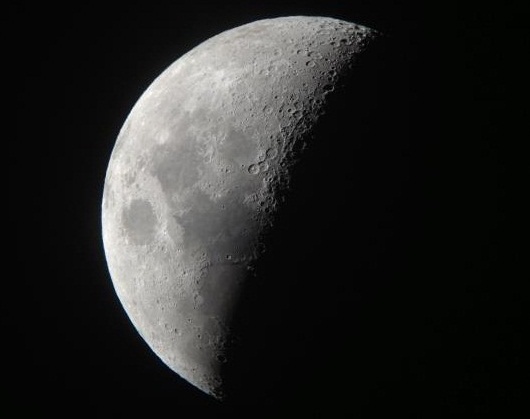
Buying for a child interested in astronomy is a very daunting task. It seems that as many objects there are in the sky there are choices of telescopes to buy. For a kid who is showing some interest in astronomy, the best telescope to get is a refractor. They require very little to no maintenance and are what a child imagines when they think of the design of a telescope. Meade’s NG70-SM refracting telescope is a great example of an affordable and useful beginners scope for a child. It’s 70mm aperture, 700mm focal length and included 9mm and 25mm eyepieces will bring in enough light for some nice low and medium power views of the craters of the Moon, cloud belts of Jupiter and even the beautiful rings of Saturn.

Getting Started
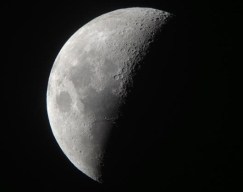
The telescope arrived, your child unwrapped it with excitement and now what? Where does he or she begin? How do they know what to look at? Why is this 70 dollar telescope collecting dust in the corner of my living room a month after Christmas? First things first, sit down with your child and walk through the directions on how to build and use the telescope. While directions are boring, reading them carefully for assembly and giving your kid a tutorial on how the telescopes works will help lessen future frustrations. On the first clear, somewhat warm night, take out the telescope just after sunset and find the Moon. Have them start out with the 25mm low magnification eyepiece and use the red dot finder to center the object in the field of view. After some time with the 25mm, switch to the 9mm for some closer views of the shadows and craters.
What’s Next?
Depending on the age of your child and continued interest shown, there are a couple avenues to consider. After spending sometime on the Moon, finding Jupiter and Saturn will probably be their next challenge. Online resources and iPod Touch/iPhone Apps can be used to find out what part of the year they can be viewed and when in the night time they are out. Moving on from these, I would suggest putting in the low power 25mm eyepiece and having them slowly scan the sky. They can explore interesting constellations and star patterns and might even come across a surprise deep sky object (Galaxy and Nebula) or two.

Additional Resources
If your kid is showing interest a few months to a year in you might want to consider purchasing some additional resources for a Christmas or  birthday present . The first thing you might want to add are some books and movies on space. In terms of books, nothing quite beats the Backyard Astronomers Guide. While this might be too advanced for kids, I would highly recommend it for teenagers who are looking for everything from basic facts to in-depth knowledge of amateur astronomy. The History and Discovery Channel’s have some incredible series that could entertain and educate anyone on the concepts of space. The Universe and When We Left the Earth are two of my favorites, giving a rich scientific and historical perspective of our place in the universe and our accomplishments in manned space flight.

Telescope Accessories
In terms of accessories for the telescope, a more powerful eyepiece for some closer views of the Moon, Jupiter and Saturn might be needed. A good affordable choice would be the 6mm Zhumell Z Series Planetary Eyepiece. It will provide 117x magnification views through the Meade NG70, which is probably near the limit of what this telescope can handle. Most importantly, this is a nice eyepiece that could be used with any potential telescope upgrade down the road.

Enjoy it!
Astronomy can be a great way for you and your child to bond over something that can help shape their perspective of our planet and their place in the universe.  Astronomy can also easily become an aggravating nightmare. Hopefully, following this basic buying and observing guide will alleviate some of those challenges and uncertainties and replace them with memories of excitement and exploration for you and your child.
The Summer of Clouds

With the fall air turning ever so colder, I thought it would be a good time do an overview of how my “summer of astronomy” went. Being a teacher, I was looking forward to June, July and August to provide me with some late night observation opportunities. While, there were some nice and clear nights throughout those 3 months, I was surprised at how cloudy it was during most evenings and nights. Even though there were not as many opportunities to go out this summer as I had hoped, there was one object in particular that I was very excited to observe, and the summer months did allow me some great views of it.

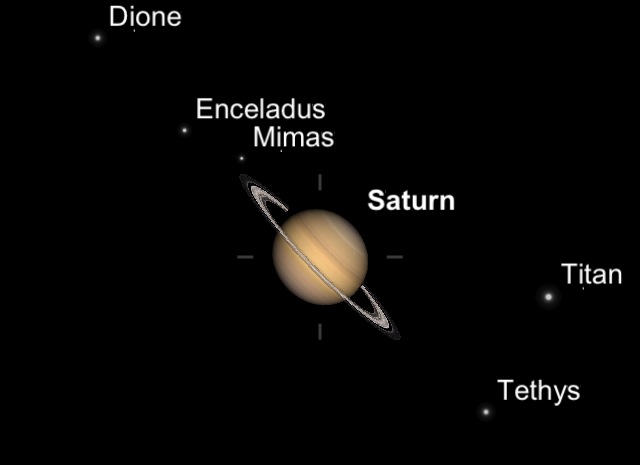
Saturn is probably my favorite object to view, so using the new 6mm Zhumell eyepiece at 200x magnification on it over the summer was quite a treat. As opposed to last year, where Saturn’s rings were head on with Earth providing a less than spectacular showing, this year they appeared much more tilted from our perspective as part of Saturn’s 29 year orbit around the Sun. This will continue to provide memorable views and glimpses of the famous Casini divide over the next 10 years. As was pointed out in my review of the Zhumell 6mm Planetary Eyepiece, the views provided from it were sharp and detailed from edge to edge providing the best sights of Saturn I have seen to date from my telescope.

While the Summer of 2011 was a bit of a disappointment overall, there were still several times when I was able to take out the telescope for some good viewings. This just goes to show that it is always a good idea to take advantage of the clear nights you are given, because you never know when another one will come along again.

Shuttle Atlantis Cleared For Landing

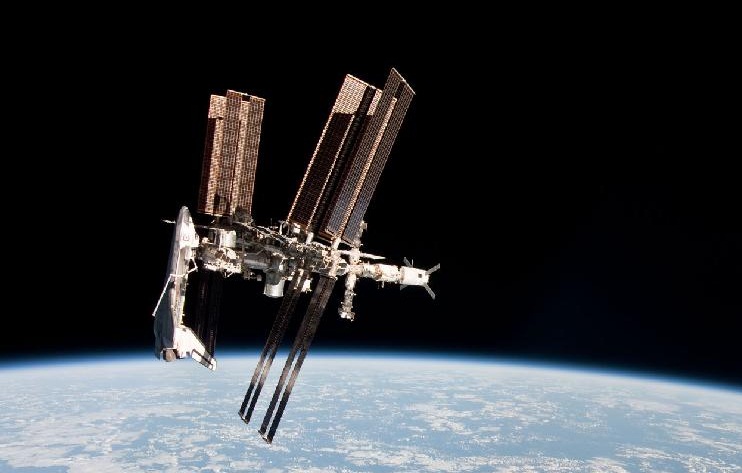
Nearing completion of its historic last mission, the Space Shuttle Atlantis is schedule for wheels down around 5:56am Thursday morning at Cape Canaveral. With the Space Station resupplied, Atlantis undocked on July 19th for its return journey home.

During its mission the crew of a Russian Soyuz Space Craft, leaving the ISS, took this rare picture of the Space Shuttle docked with the Space Station.

Be sure to catch live coverage of the Shuttle’s return to Earth tomorrow morning. Sadly, I’ve checked the Space Shuttle tracking websites and it appears the shuttle will be to low on the horizon to view from my vantage point in Virginia. Be sure to double check where you live, this will be the last time to see the “star” of the Space Shuttle fly over.
Space Station and Shuttle Fly Over Website 

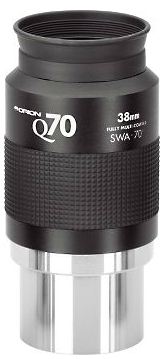
Scanning the Sky with the 38mm Orion Q70

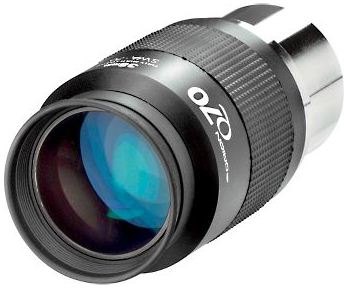
Astronomy does not have to be a hobby that breaks your wallet. As much as some may say, and as great as they may be, you do not have to buy eyepieces that are more expensive than your telescope to enjoy the beauty of the night sky. Reading Astronomy Forums, researching what to buy for my first 2 in eyepiece, I was given suggestions such as the Televue Nagler Eyepiece Series which receives rave reviews for its quality but also costs between 350 and 570 dollars. I began to worry that I would never be able to afford a nice high quality eyepiece and that I would notice the optical flaws mentioned so often in forums of cheaper designed eyepieces. Putting those fears aside, and after extensive internet searching and reviews read, I decided to buy the 2in. Orion 38mm Q70 Eyepiece. I considered this to be my first “premium/high dollar eyepiece” purchase. With Orion holding a post Christmas 10 percent off sale in January,  90 dollars got me this wide angle, low powered 2in. eyepiece.

Optical Quality
Peering through the large 2 in. eyepiece for the first time gave me the perception of looking out the window of a space ship. The field of view was tremendous, showing just over 2 degrees of space. One of the main reasons, I had wanted this eyepiece was to view large area objects such as the Pleiades Open Star Cluster. The seven stars of this cluster appeared beautifully, with ghostly hints of the Nebula of Taurus around several of them, as they only could in binoculars or an ultra wide eyepiece design. Not being a super high dollar eyepiece design, there is some astigmatism present (star stretching) near the extreme 5 to 10 percent of view, but it is something that would probably go unnoticed to most casual observers and is only noticeable to me when I think to look for it.

Use
I find myself using this eyepiece most often when hunting for deep sky objects (Nebulae, Star Clusters and Galaxies). A few days ago, I used it nearly exclusively when hunting down some messier objects and doing detailed viewing of the Veil Nebula and Dumbbell Nebula. Most often though, I enjoy putting in this eyepiece and just slowly scanning parts of the Milky Way.

Build Quality
The 5 element aluminum design weighs in at 1.3lb and feels as sturdy as it looks in promotional images. Blackened lens egdes and a fully multi-coated design means that you will recieve maximum light transparency with little to no glaring or ghosting of dim or bright objects. This is by far the biggest eyepiece in my collection, make sure your telescope and carrying case can accommodate a 2 in eyepiece before buying.

With the amount of money put into this new product, I was anxious that the higher quality I felt I had paid for might not be apparent. After nearly 6 months of use I can thankfully say that this, my first “premium/high dollar” eyepiece, has given me the quality that I hoped for and more importantly it has amazed me with its wide open views, as though I am looking through a portal, into the impressive sights of our universe.

30 Years Since Liftoff: A Reflection on the Space Shuttle Program

On April 12th 1981, John Young and Robert Crippen made history as the first Americans to pilot Columbia STS-1, the first orbital flight of the newly minted NASA Space Shuttle Fleet. Now, over 30 years later, the era of the Space Shuttle is coming to an end on July 8, with the 11:26am launch of STS-135.

As important as the Space Shuttle Program has been over the past 30 years, there has never quite been the excitement or following for this program as there was for the Mercury, Gemini and Apollo missions of the 60’s and early 70’s. There are some important reasons for this, the most major one being the correlation of the Space Race with the Cold War. Take the Russians out of the equation and the sense of competition and want of superiority would not have translated into the same level of exploration, which culminated with Neil Armstrong, Buzz Aldrin and Michael Collin’s Apollo 11 landing on the Moon in 1969.

With the Apollo era finishing up in the early 1970’s, NASA made an interesting and controversial decision to move its attention from Lunar to low Earth orbital missions. One of the main reasons for this was cost. With the Apollo era ending abruptly from a lack of congressional funding, the thought was to create a lower cost, reusable space craft that could continue the path of exploration set forth by Apollo but at a much reduced price tag to US tax payers. Thus, the Space Shuttle Program was born.

Since that first launch back in 1981, the Shuttle Program has seen its share of triumphs and tragedies. In terms of scientific triumphs, its launching of the Hubble Space Telescope in 1990 has opened the worlds eyes to the elegance and complexities of our universe, inspiring young people to study the sciences and allowing us a little bit of perspective as to our place in the vast cosmos. In terms of exploration, it has led to the creation of the International Space Station, which continues to test the human ability to adapt and live in extreme circumstances along with the complex scientific experiments that occur there on a daily basis. However, with all of these triumphs, we cannot forget the loss of the 14 crew members of the Space Shuttle Challenger and Space Shuttle Columbia who gave their lives for the betterment of mankind and the exploration of the final frontier. These two disasters and the flaws in the Space Shuttle Program that they revealed will always be mentioned at the forefront of retrospectives dealing with this era of NASA history.

With over a billion dollars in cost for most Shuttle launches and the tragic failures of the Challenger and Columbia missions, some raise the question as to whether the Shuttle Program was worth it? While the excitement of the Space Shuttle may never have matched that of NASA’s early days, the doors of scientific and human exploration that have been opened over the past 30 years have been tremendous.  While the Space Shuttle may be a low Earth orbiting space craft, the scientific instruments it has brought into space have opened our eyes to the greater wonders of the universe in a way that the Gemini, Mercury, or even Apollo missions could not.

Viewing Super Nova Remnants and Nebulae, “Oh, was that Dim Fuzzy Cloud it”

Supernova Remnants and Planetary Nebula can be a disappointment for most casual observers. It’s a lot more difficult to wow people with the faint glow of a cloud like object than it is to show the bright and detailed craters of the Moon or the rings of Saturn. For me, viewing these “faint fuzzies” is more about the challenge of finding them and the story they tell. What is the story behind the creation of the Veil Nebula? How far do I star hop to find M27, the Dumbbell Nebula?  On this night, I turned my attention to these types of objects and enjoyed the sights and stories they provided.

The Eastern Veil Nebula
This ghostly figure is all that remains of a dead star’s super nova. Some 5 to 8 thousand years ago the dying star exploded and flung its gasses into the far reaches of space.  The stretched out Veil Nebula is what we see of those remnants, today. Star hoping from Deneb down to Gienah, I found the Eastern portion of the Veil Nebula. It’s ghostly appearance is easy to miss unless you knew what you are looking for. The large 2 degrees of view provided by my 2in. 38mm Q70 Orion Eyepiece provided enough room to fit all of this portion of the nebula in sight. Having an O-III filter for my eyepiece would have greatly helped with this particular Nebula because of the type of light waves it sends out.

The Dumbbell Nebula

It’s easy to understand why this planetary nebula in the Vulpecula Constellation was the first of its kind to be discovered. Scanning the skies and coming upon it on purpose or accidentally, leaves little doubt that this is something unique. When certain sized stars near the end of their life they eject out layers of gases which create the amazing views of a planetary nebula. With a magnitude of 7.5, it is easily visible and displays a slight grayish blue hue.

Think about this next time you view these or other deep sky objects. The distance from Earth to the Dumbbell Nebula is roughly 1,360 light years. Meaning that, when the light we see today through our telescopes left the Dumbbell Nebula it was the year 651 on Earth. Looking at these distant objects turns a telescope into a time machine peering back in time over thousands, hundreds of thousands and even millions of years. While deep sky objects may not always “wow” like the planets, the journey to find them and stories they tell make them a sight to be hold.

Starlog: June 30, 2011 and July 1, 2011

6mm Zhumell Planetary Eyepiece Review

In the world of amateur astronomy nothing quite compares to the feeling of getting a new piece of equipment.  Be it an eyepiece, filter or telescope; the excitement and potential that is imagined of this product cannot be overstated. While showing off new equipment may be a favorite of amateur astronomers, having a target that truly shows off its capabilities is where the imagination becomes reality.  For myself, the arrival of the Zhumell 6mm Planetary Eyepiece was just this type of event and the planet Saturn proved to be an exciting first test of its quality.

6mm Zhumell Z Series Planetary Eyepiece
Optical Quality
In the past, using a barlow with my 10mm plossl had presented a 240x magnification image of Saturn that was soft and difficult to keep in the field of view. The Zhumell eyepiece provided sharp images from edge to edge with no distortions noticeable within the field. From a combination of superior optical quality as well as the lower 200x magnification provided by the Zhumell 6mm, the image of Saturn floating through the eyepiece appeared sharp and detailed.

Eye Relief
Another aspect of this eyepiece that impresses, comes from its eye relief. The generous 20mm eye relief means that objects can be comfortably viewed without having to push your eye nearly on the lens as can be the case with other low millimeter, high power, eyepieces. This may be a mere convenience for most observes, but for those who must wear glasses while observing this feature is a necessity.

Build Quality and Technobabble
Overall, the eyepiece is very sturdy and appears to be a high quality build, particularly for it’s price range. For a 1.25in eyepiece, this thing is big. Don’t let that deter you from buying it, but be aware that the 7 element design does create an eyepiece that weighs in at 8oz with dimensions of 3.7 in x 1.7 in.

Conclusions
I was delighted by the performance of this eyepiece. With this being my first Zhumell product, I was a bit concerned that their low prices would also mean lower quality. This could not be farther from the truth as has been proven by the incredible optical quality and strong build of the 6mm Zhumell Z Series Planetary Eyepiece. At $59.00 (nearly half the price of the identical Orion Edge-On Planetary Eyepieces) this is a deal that cannot be beat.

Planetary Observing Tips

Planets are the reason I wanted a telescope as a kid. My first views of Saturn and Jupiter came at a very young age. I was amazed at being able to see cloud patterns on Jupiter and splits in the rings of Saturn. To this day, Saturn and Jupiter are my favorite objects to view and show off to others. Due to the higher magnifications needed to view the planets, there are some guidelines that if followed can provide exceptional views of these objects.  Along with this and Saturn being out in full glory for the remainder of the summer, here are some tips for how to best view the planets of the nighttime sky.

1. Make sure the scope has plenty of time to cool down to the outside temperature.  This can range anywhere from one to a couple of hours depending on the size and type of telescope being used. A telescope not cooled will cause turbulence between warm and cool air in the tube, creating poor high magnification images that will not allow fine detail of the planets to come through.

2. Not every night is a good night for viewing planets. A steady atmosphere is crucial for sharp planetary observing. If the wind is blowing and the stars are twinkling (this occurs from atmospheric turbulence) the planets will appear as wavy and washed out images in any scope.

3. Magnification is key to getting details out of the planets. The particular telescope being used is a major factor in how high it can be pushed. However, any scope regardless of aperture is usually limited to around 300x magnification because of atmospheric conditions and how fast the object moves by in the field of view if a tracking motor is not installed. For my 8 in reflector, I have found that 110x and 200x magnifications provide amazing details of Jupiter, Saturn, Mars and the Lunar Surface.(To find your telescopes magnification, divide the focal length of the telescope by the eye piece being used: My Telescope and Eyepiece Combination; 1,200mm/6mm=200x magnification)

When observing with a friend or family member, nothing can compare to the awe and excitement of knowing that some of the stars in the sky are actually planets with detailed cloud formations and ring structures. Using these tips can help ensure the highest quality out of the views provided by our incredible celestial neighbors.