Top 5 Spring Astronomy Objects

Winter is cold!  Whenever I conjure up enough bravery to observe during the cold late and early months of the year I can’t help but think of the poor kid in “A Christmas Story” who horrifically froze his tongue to the freezing pole. Now, I’m not suggesting that amateur astronomers are constantly licking their telescopes, but there have been a few instances when the freezing steel tube touched by my bare warm hands and froze to them for an instant. Thankfully, those months are behind us and the warmer nights of the spring are upon us. What am I looking forward to from the spring time nights? Well, I’m glad I asked, because here are my top 5 spring observation sights!

5. Orion’s Nebula-I Know, I know, stop your shouting! Now it may be cheating to include this in my spring list when it is considered a winter constellation, but I get the most enjoyable views of Orion’s mighty nebula in the warmer nights of the spring than the cold nights of the winter.  The greenish blue glowing inner clouds are brought out beautifully by low to medium powered observations.  Views through a 2 inch 38 mm eyepiece reveal the dark background of space against the ghostly clouds of the nebula, bringing out the contrast and internal detail even more.  Be sure to add a UHC filter to experience even more contrast and depth.

4. Beehive Cluster-Last year I came across this cluster for the first time while doing observations of Mars at college.  It may not be the most impressive star cluster out there, but it is still quite a sight to spend some time on.

3. Bode’s Nebula (M81 & M82)-Two of my favorite galaxies come back into prominence during this time of the year.  The best part about these galaxies is that they are bright, at least as far as galaxies go, and you can observe them through a variety of ways.  View both together with medium and low power eyepieces or individual study them through high power observations.  Either way will provide rich views of the neighboring spiral and irregular galaxies.

2. Virgo Galaxy Cluster-No other spot of space has more beautiful galaxies crammed together than this bunch near the constellation Virgo which rises high during the months of spring.  Scanning through this expanse will reveal many of the Messier Lists most prominent galaxies.  Start out with low magnification and simply scan the field for the vague ghost smudges that are galaxies.  Once you come across the prominent ones, play around with the magnification and test out the light gathering capability of your scope to reveal detail in these faint fuzzies.

1. Saturn-The first love of many astronomers returns to prominence in the month of April and this time she is really putting on a show.  With her rings tilted more towards Earth, the incredible Cassini divide is once again visible, making Saturn must more impressive than the previous two years.  My hope is to have a new 6mm Zhumell planetary eyepiece for 200X observations of Saturn for the spring and early summer.

Space Station and Shuttle Flyover’s this Week

With only two more Shuttle launches scheduled, following the completion of Discovery’s mission this week, any opportunities to view the Space Shuttle while in orbit should be taken now, because they will soon by a thing of the past.  To help capitalize on any observing opportunities, NASA has a website that details when flyovers of the Space Shuttle and International Space Station occur.
NASA Flyover Site


When to View
Luckily, several times this week, the International Space Station and Space Shuttle will both be viewable from our vantage point here in Southwest Virginia. Beginning on Monday and continuing through Friday the celestial pair will be visible flying overhead for anywhere from 2 to 4 minutes, depending on the day.  It appears as though Monday will have the Space Station and Space Shuttle docked for the flyover, with them being a few minutes apart from Tuesday on, following Discovery’s departure from the Station.

Observing Tips
Be sure to use the NASA website to figure out what direction the space ships will be coming from, go outside a few minutes before the scheduled flyover and face that direction.  The pair of ships should appear as dim stars forming up above as they slowly sail across the sky.  Moving over head, they will gain in brightness until moving towards the horizon and dimly fading away just as they had appeared.  The best way to view them is with your bare eyes, although binoculars can also be useful.  Only a telescope can pick up any detailed structure as was noted in my observation of the Space Station last year.  It may just look like a moving star going over head, but knowing that there are people working and living in these craft as they travel 200 miles above orbiting the Earth at 17,000 mph, makes the magnificence of these sightings all the more special.

One Year Anniversary and the Orion XT8i Video Review

One year ago today, I posted my first update for Late Night Astronomy.
Since that time the site has recieved over 5,000 hits with the vast majority coming from people searching for a variety of topics on google.  I never could have imagined that so many people would be using this site for news and information on topics dealing with astronomy.

To celebrate the 1 year anniversary, Lauren and I are starting a new video series filled with reviews and news on a variety of astronomical equipment and events.  To start off this series, we’d like to present our video review of the Orion XT8i Intelliscope.

iPhone and iPod Touch Astronomy Apps

Introduction
Telescopes have changed very little since the 1600’s.  Hans Lippershey’s  and  Sir Isaac Newton’s designs have proven to be an overwhelming success because of a common theme that runs through all great inventions, high performance and simplicity.  While there have been few advancements in the basic principles of how a telescope works, there have been many achievements in the bells and whistles of telescopes, including bases, tracking systems and more recently micro computer technology.  An even more recent revolution has come from the handheld market where apps and mobile devices can now allow us to connect with our telescopes and research topics in ways that just 5 to 10 years ago were not possible.  Throughout this section, I will be reviewing my top three most useful Astronomy Apps.

SkySafari-$15.00
Having the sky in the palm of your hands is what makes “SkySafari” by Southern Stars, my number one go to app for observations.  Realtime 3d rendered graphics displaying what’s up above is just the start of it.  Where SkySafari truly excels, comes when a map of the night sky an hour or two in the future is needed.  With built in time settings, you can watch the sky move to what will be over head minutes, hours, days, months, or even years in the future. Want specific information on the Orion Nebula, including distance, magnitude, right ascension and declination, it’s all at the touch of your finger.  Recent updates for the iPhone 4 and iPod Touch’s retina display along with internal programming improvements to this app provide beautiful cosmic images of planets and star maps at high resolutions with silky smooth frame rates.  Do not let the price tag scare you away from this program. Out of all of the astronomy apps I have used, this one consistently impresses me with its simplicity, high performance and free product updates.

Moon Globe-Free
Where SkySafari has an immense database of thousands of objects, Moon Globe choose to concentrate on one celestial neighbor, the Moon. Lunar observing can be a very rewarding experience if goals are set and a detailed analysis of the lunar surface is done.  This app provides all the information needed to effectively bring these results about. Recently updated retina display graphics provide a lunar surface that is extremely detailed and just plain enjoyable to look at.  The true magic of this app comes from being able to control the phases of the Moon. Watching the lunar surface pop up with 3d effects when the shadows hit mountain ranges and craters is very realistic and fun to do even when not using it for observing.  For tracking down specific craters or hunting down the six lunar landing sights from the Apollo missions, this app has it covered with accurate graphics pointing out most of the major craters viewable by telescope. For the free price tag you really can’t beat this app if the Moon is a favorite target of yours to observe.

Exoplanet-Free
While two observing programs make up my top two astronomy apps, the app rounding out my top 3 list delivers break through astronomical discoveries to my iPod Touch.  Exoplanet is an ever growing database of the over 500 exoplanets that have been discovered outside of our solar system.  Along with a list of these planets is detailed information on where the planet is located, what its size is along with a wide variety of other bits of interesting facts. CGI models of the newly discovered planets are available to compare their size to the planets of our own solar system and 3d orbital patterns are also viewable with plenty of information that the app refers to as “technobabble”.  Another area where this app shines is the Milky Way feature that visually shows the location of all discovered exoplanets in our galaxy. Zooming in and out of these solar systems is as simple as the pinch of your fingers. The 3d model of the Milky Way is impressive and knowing where these other planets are located in relation to our own solar system makes their discovery seem all the more amazing.

Summary
While there are several hundred astronomy apps in the iTunes app store, these three are the ones I consistently come back to when planing and performing nightly observations and wanting up to date information on interesting scientific discoveries in Astronomy.

SkySafari

Moon Globe

Exoplanet

2010: “Late Night” Year in Review

The stats helper monkeys at WordPress.com mulled over how this blog did in 2010, and here’s a high level summary of its overall blog health:

Healthy blog!

The Blog-Health-o-Meter™ reads Wow.

Crunchy numbers

Featured image

A Boeing 747-400 passenger jet can hold 416 passengers. This blog was viewed about 3,900 times in 2010. That’s about 9 full 747s.

In 2010, there were 31 new posts, not bad for the first year! There were 110 pictures uploaded, taking up a total of 89mb. That’s about 2 pictures per week.

The busiest day of the year was June 17th with 270 views. The most popular post that day was A Late Night with Conan O’Brien.

Where did they come from?

The top referring sites in 2010 were facebook.com, cloudynights.com, astoldbylauren.wordpress.com, digg.com, and WordPress Dashboard.

Some visitors came searching, mostly for ring nebula, nebula, hubble, hubble images, and pictures of lunar landing sites.

Attractions in 2010

These are the posts and pages that got the most views in 2010.

1

A Late Night with Conan O’Brien June 2010
1 comment and 1 Like on WordPress.com,

2

Star Trek: The Deluxe Edition, Soundtrack Review September 2010
1 comment

3

The Good Ole South July 2010
5 comments

4

Breaking News: Mars will not be as big as the Moon in August July 2010

5

Photo Stacking-Easter Sunday: April 4, 2010 April 2010
4 comments

Total Lunar Eclipse Tonight

Put on your slippers and throw on your snuggies because the cold winter nights of North America are about to be heated by pure excitement as thousands wake up at in the middle of the night to view a total lunar eclipse which by pure chance is occurring on the winter solstice for the first time in over 370 years.

Tonight, beginning around 1:00am the Earth will slowly but surely move between the Sun and Moon.  As the Earth moves across the light path of the Sun, the Moon will start to go dark as our planets massive shadow begins to stretch over it.  The shadow will begin in the corner and slowly make its way across the moons surface until the whole of the Moon is covered by the Earth’s shadow around 3:20am.  It’s important to note that the Moon will still be partially visible once it is completely covered, but it will have a strange red glow which comes from light traveling through Earth’s atmosphere still hitting the lunar surface.

The nicest thing about viewing lunar eclipses is that the best way to observe them is by simply going out and looking up.  Telescopes will actually dampen the effect because of the amount of light they pick up partially washing out the shadow.  Binoculars might be useful but I would suggest just going out around 1:30am, 2:00am, 3:00am and 3:20am and follow the progress with your own eyes as the Moon becomes covered by the shadow of us on Earth.

Update: 1:40am
Clouds were pretty heavy but I did get a few breaks where about a quarter of the left side of the moon looked as though it had been bitten off.  Pretty awesome getting to see my first lunar eclipse!  Now its time to go off to bed for work tomorrow.

Breaking News: NASA Discovers New Type of Life Living on Earth

The media and internet have been set abuzz as NASA announced today its plans to reveal information regarding an “Astrobiology Discovery” tomorrow at 2 p.m.  The vagueness of the press release has some speculating that it could be the first discovery of life outside of Earth, possibly on Saturn’s Moon, Titan.  Come back to Late Night Astronomy tomorrow for full coverage of the news conference.

NASA PRESS RELEASE:

MEDIA ADVISORY : M10-167

NASA Sets News Conference on Astrobiology Discovery; Science Journal Has Embargoed Details Until 2 p.m. EST On Dec. 2

WASHINGTON — NASA will hold a news conference at 2 p.m. EST on Thursday, Dec. 2, to discuss an astrobiology finding that will impact the search for evidence of extraterrestrial life. Astrobiology is the study of the origin, evolution, distribution and future of life in the universe.

The news conference will be held at the NASA Headquarters auditorium at 300 E St. SW, in Washington. It will be broadcast live on NASA Television and streamed on the agency’s website at http://www.nasa.gov.

Participants are:
–     Mary Voytek, director, Astrobiology Program, NASA Headquarters, Washington
–     Felisa Wolfe-Simon, NASA astrobiology research fellow, U.S. Geological Survey, Menlo Park, Calif.
–     Pamela Conrad, astrobiologist, NASA’s Goddard Space Flight Center, Greenbelt, Md.
–     Steven Benner, distinguished fellow, Foundation for Applied Molecular Evolution, Gainesville, Fla.
–     James Elser, professor, Arizona State University, Tempe

Media representatives may attend the conference or ask questions by phone or from participating NASA locations. To obtain dial-in information, journalists must send their name, affiliation and telephone number to Steve Cole at stephen.e.cole@nasa.gov or call 202-358-0918 by noon Dec. 2.

For NASA TV streaming video and downlink information, visit:

http://www.nasa.gov/ntv

UPDATE-December 2, 2010
False Alarm!!!  No Aliens, at least not of the Extra terrestrial type.
Turns out the big announcement was a new bacteria found in an arsenic California lake.  This new finding is the first time scientist have discovered a life form that can live in a way different to all other types on Earth.  This drastic change in how we view life, means that there is now evidence that many different types of life can exist in many different forms throughout the universe.  As always, stay tuned to Late Night Astronomy, your number 1 source for all astrobioligcal news on the internets.

Deep-Sky List: Supernova Remnants

The sky is filled with many wonders.  While the universe is encapsulated with incredible examples of beauty through creation it is also filled with examples of beauty through death.  Planetary nebula or supernova remnants are the expanding aftermath or shock wave of a star that has recently exploded at the end of its life cycle.   However, in death there is also a new beginning as is seen by our own sun which is a third generation star made up of material from supernova remnants of the ancient celestial past.  These ghostly objects are best viewed with a nebula filter and in a dark site location.  Here is my starting list of  these beautiful former stars that I hope to view over the next few months and years.

  • Large and Bright

Ring Nebula (M57)-9th magnitude smoke ring surrounding a very faint star
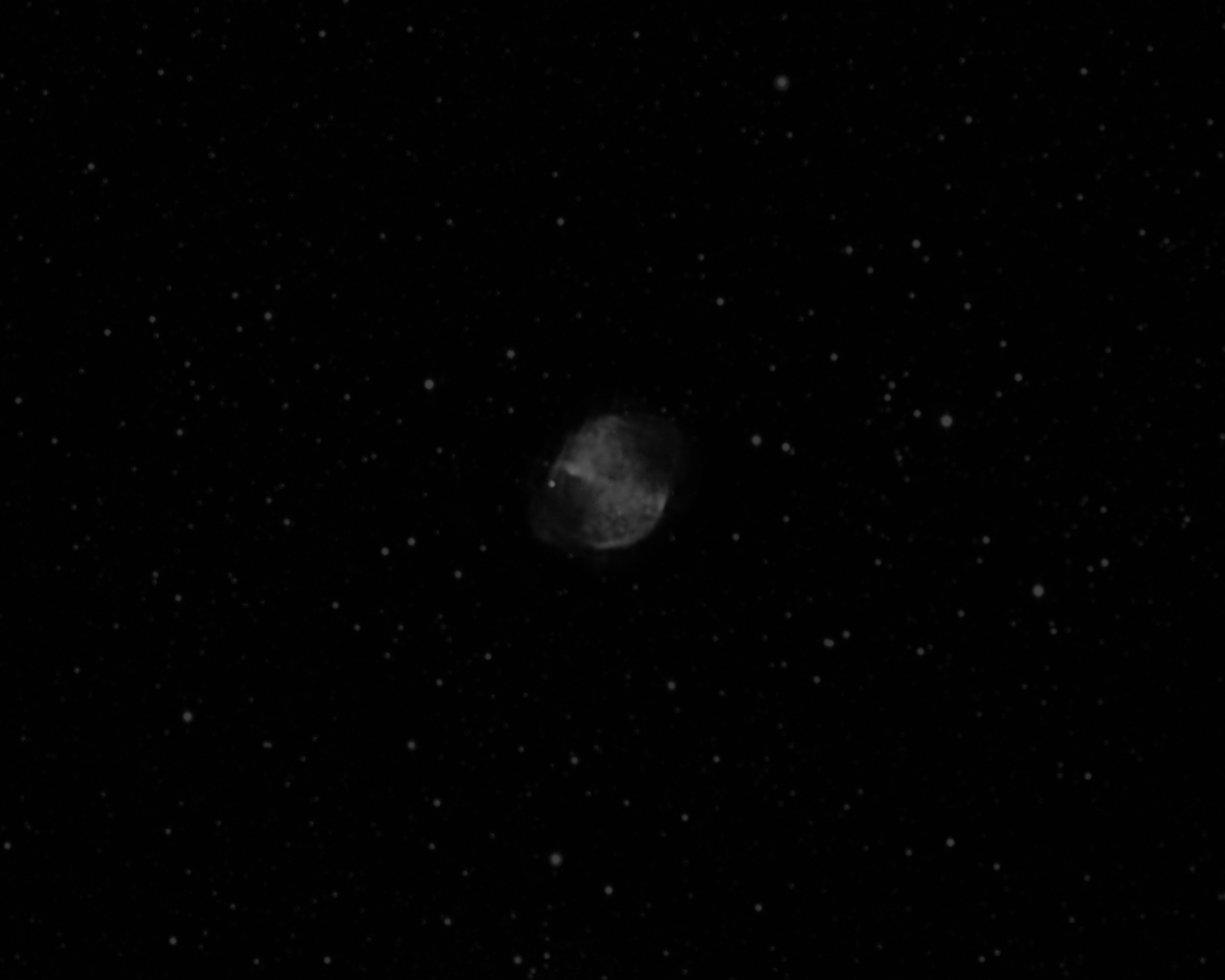
Dumbell Nebula (M27)-Capable of being seen been binoculars
NGC40

  • Small Planetaries:(Make up the majority of supernova remnants, often hard to distinguish from stars at low power)

Blue Snowball (NGC7662)-Northern Andromeda
Eskimo Nebula (NGC2392)-Gemini
Blinking Planetary (NGC6826)-Cygnus
Saturn Nebula (NGC7009)
NGC1514
NGC7008
IC289

  • Large and Faint:(More than 60 arc seconds)

Helix Nebula (NGC7293)-Spans half the diameter of the Moon
NGC6781 & NGC246-Best viewed under dark sky conditions
Medusa Nebula-Huge planetary over 11 arc minutes across, difficult to view

  • Exploding Supernova Remnants

Crab Nebula (M1)-Recent explosion seen around 1054 A.D. in China during daylight
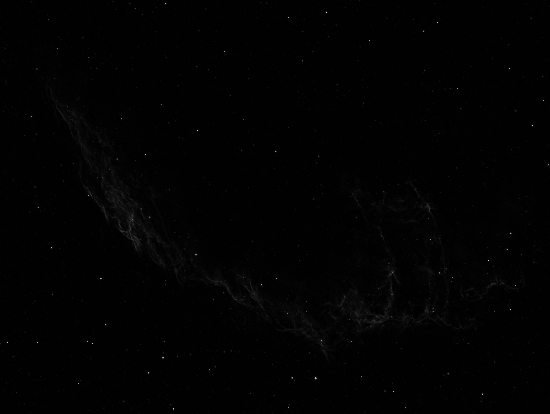
Veil Nebula (NGC6960)
IC443-Crescent shaped arc, extremely faint

Source:The Backyard Astronomers Guide