Viewing Super Nova Remnants and Nebulae, “Oh, was that Dim Fuzzy Cloud it”

Supernova Remnants and Planetary Nebula can be a disappointment for most casual observers. It’s a lot more difficult to wow people with the faint glow of a cloud like object than it is to show the bright and detailed craters of the Moon or the rings of Saturn. For me, viewing these “faint fuzzies” is more about the challenge of finding them and the story they tell. What is the story behind the creation of the Veil Nebula? How far do I star hop to find M27, the Dumbbell Nebula?  On this night, I turned my attention to these types of objects and enjoyed the sights and stories they provided.

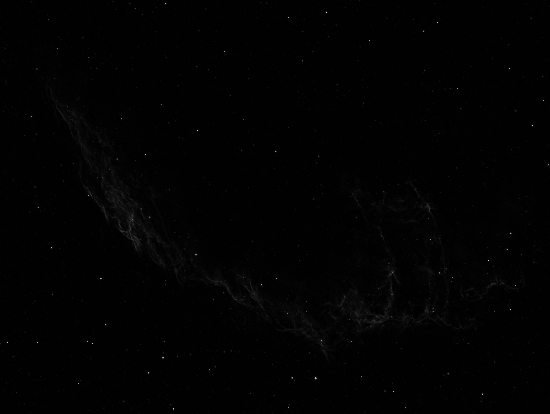
The Eastern Veil Nebula
This ghostly figure is all that remains of a dead star’s super nova. Some 5 to 8 thousand years ago the dying star exploded and flung its gasses into the far reaches of space.  The stretched out Veil Nebula is what we see of those remnants, today. Star hoping from Deneb down to Gienah, I found the Eastern portion of the Veil Nebula. It’s ghostly appearance is easy to miss unless you knew what you are looking for. The large 2 degrees of view provided by my 2in. 38mm Q70 Orion Eyepiece provided enough room to fit all of this portion of the nebula in sight. Having an O-III filter for my eyepiece would have greatly helped with this particular Nebula because of the type of light waves it sends out.

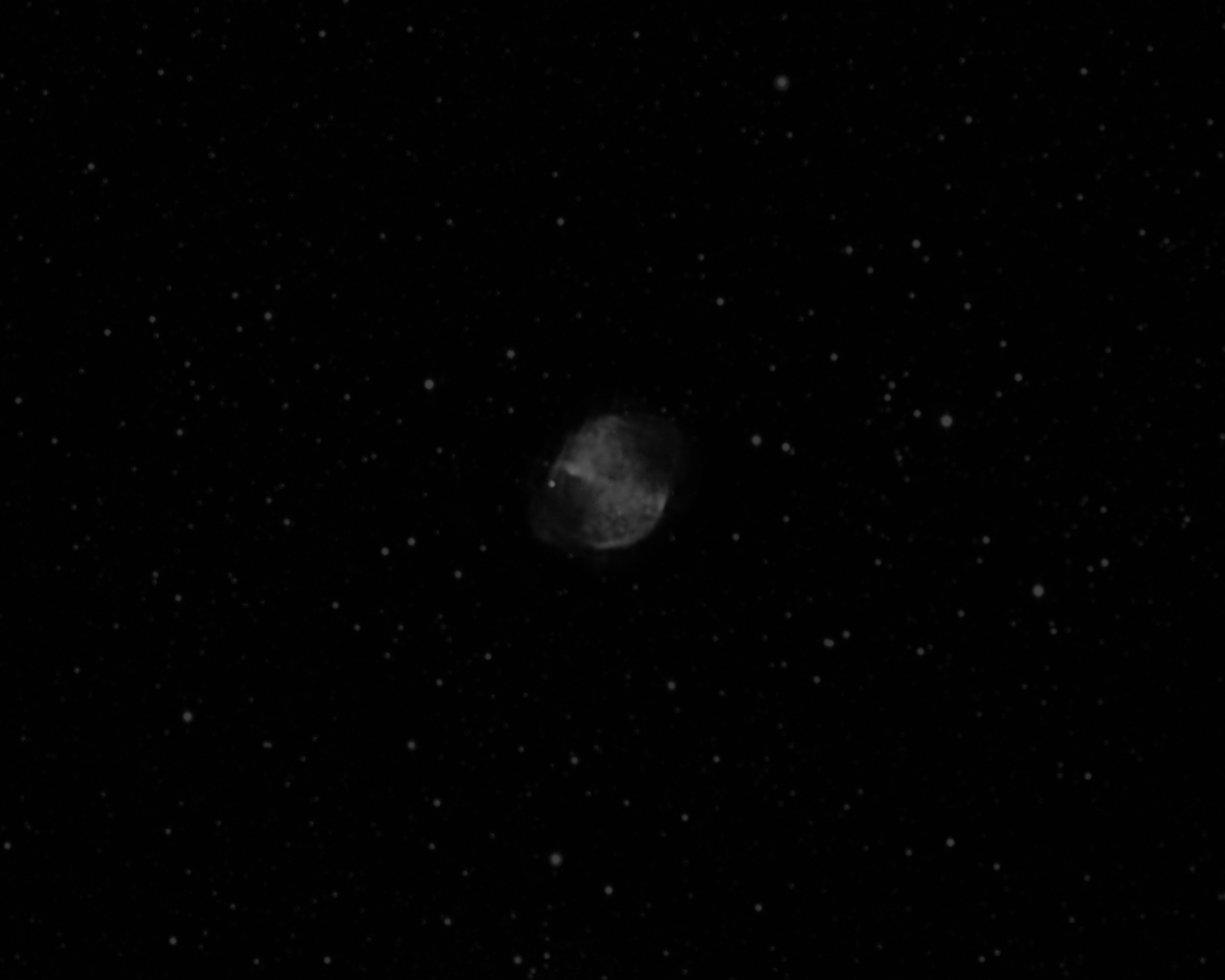
The Dumbbell Nebula

It’s easy to understand why this planetary nebula in the Vulpecula Constellation was the first of its kind to be discovered. Scanning the skies and coming upon it on purpose or accidentally, leaves little doubt that this is something unique. When certain sized stars near the end of their life they eject out layers of gases which create the amazing views of a planetary nebula. With a magnitude of 7.5, it is easily visible and displays a slight grayish blue hue.

Think about this next time you view these or other deep sky objects. The distance from Earth to the Dumbbell Nebula is roughly 1,360 light years. Meaning that, when the light we see today through our telescopes left the Dumbbell Nebula it was the year 651 on Earth. Looking at these distant objects turns a telescope into a time machine peering back in time over thousands, hundreds of thousands and even millions of years. While deep sky objects may not always “wow” like the planets, the journey to find them and stories they tell make them a sight to be hold.

Starlog: June 30, 2011 and July 1, 2011

6mm Zhumell Planetary Eyepiece Review

In the world of amateur astronomy nothing quite compares to the feeling of getting a new piece of equipment.  Be it an eyepiece, filter or telescope; the excitement and potential that is imagined of this product cannot be overstated. While showing off new equipment may be a favorite of amateur astronomers, having a target that truly shows off its capabilities is where the imagination becomes reality.  For myself, the arrival of the Zhumell 6mm Planetary Eyepiece was just this type of event and the planet Saturn proved to be an exciting first test of its quality.

6mm Zhumell Z Series Planetary Eyepiece
Optical Quality
In the past, using a barlow with my 10mm plossl had presented a 240x magnification image of Saturn that was soft and difficult to keep in the field of view. The Zhumell eyepiece provided sharp images from edge to edge with no distortions noticeable within the field. From a combination of superior optical quality as well as the lower 200x magnification provided by the Zhumell 6mm, the image of Saturn floating through the eyepiece appeared sharp and detailed.

Eye Relief
Another aspect of this eyepiece that impresses, comes from its eye relief. The generous 20mm eye relief means that objects can be comfortably viewed without having to push your eye nearly on the lens as can be the case with other low millimeter, high power, eyepieces. This may be a mere convenience for most observes, but for those who must wear glasses while observing this feature is a necessity.

Build Quality and Technobabble
Overall, the eyepiece is very sturdy and appears to be a high quality build, particularly for it’s price range. For a 1.25in eyepiece, this thing is big. Don’t let that deter you from buying it, but be aware that the 7 element design does create an eyepiece that weighs in at 8oz with dimensions of 3.7 in x 1.7 in.

Conclusions
I was delighted by the performance of this eyepiece. With this being my first Zhumell product, I was a bit concerned that their low prices would also mean lower quality. This could not be farther from the truth as has been proven by the incredible optical quality and strong build of the 6mm Zhumell Z Series Planetary Eyepiece. At $59.00 (nearly half the price of the identical Orion Edge-On Planetary Eyepieces) this is a deal that cannot be beat.

Planetary Observing Tips

Planets are the reason I wanted a telescope as a kid. My first views of Saturn and Jupiter came at a very young age. I was amazed at being able to see cloud patterns on Jupiter and splits in the rings of Saturn. To this day, Saturn and Jupiter are my favorite objects to view and show off to others. Due to the higher magnifications needed to view the planets, there are some guidelines that if followed can provide exceptional views of these objects.  Along with this and Saturn being out in full glory for the remainder of the summer, here are some tips for how to best view the planets of the nighttime sky.

1. Make sure the scope has plenty of time to cool down to the outside temperature.  This can range anywhere from one to a couple of hours depending on the size and type of telescope being used. A telescope not cooled will cause turbulence between warm and cool air in the tube, creating poor high magnification images that will not allow fine detail of the planets to come through.

2. Not every night is a good night for viewing planets. A steady atmosphere is crucial for sharp planetary observing. If the wind is blowing and the stars are twinkling (this occurs from atmospheric turbulence) the planets will appear as wavy and washed out images in any scope.

3. Magnification is key to getting details out of the planets. The particular telescope being used is a major factor in how high it can be pushed. However, any scope regardless of aperture is usually limited to around 300x magnification because of atmospheric conditions and how fast the object moves by in the field of view if a tracking motor is not installed. For my 8 in reflector, I have found that 110x and 200x magnifications provide amazing details of Jupiter, Saturn, Mars and the Lunar Surface.(To find your telescopes magnification, divide the focal length of the telescope by the eye piece being used: My Telescope and Eyepiece Combination; 1,200mm/6mm=200x magnification)

When observing with a friend or family member, nothing can compare to the awe and excitement of knowing that some of the stars in the sky are actually planets with detailed cloud formations and ring structures. Using these tips can help ensure the highest quality out of the views provided by our incredible celestial neighbors.

Top 5 Spring Astronomy Objects

Winter is cold!  Whenever I conjure up enough bravery to observe during the cold late and early months of the year I can’t help but think of the poor kid in “A Christmas Story” who horrifically froze his tongue to the freezing pole. Now, I’m not suggesting that amateur astronomers are constantly licking their telescopes, but there have been a few instances when the freezing steel tube touched by my bare warm hands and froze to them for an instant. Thankfully, those months are behind us and the warmer nights of the spring are upon us. What am I looking forward to from the spring time nights? Well, I’m glad I asked, because here are my top 5 spring observation sights!

5. Orion’s Nebula-I Know, I know, stop your shouting! Now it may be cheating to include this in my spring list when it is considered a winter constellation, but I get the most enjoyable views of Orion’s mighty nebula in the warmer nights of the spring than the cold nights of the winter.  The greenish blue glowing inner clouds are brought out beautifully by low to medium powered observations.  Views through a 2 inch 38 mm eyepiece reveal the dark background of space against the ghostly clouds of the nebula, bringing out the contrast and internal detail even more.  Be sure to add a UHC filter to experience even more contrast and depth.

4. Beehive Cluster-Last year I came across this cluster for the first time while doing observations of Mars at college.  It may not be the most impressive star cluster out there, but it is still quite a sight to spend some time on.

3. Bode’s Nebula (M81 & M82)-Two of my favorite galaxies come back into prominence during this time of the year.  The best part about these galaxies is that they are bright, at least as far as galaxies go, and you can observe them through a variety of ways.  View both together with medium and low power eyepieces or individual study them through high power observations.  Either way will provide rich views of the neighboring spiral and irregular galaxies.

2. Virgo Galaxy Cluster-No other spot of space has more beautiful galaxies crammed together than this bunch near the constellation Virgo which rises high during the months of spring.  Scanning through this expanse will reveal many of the Messier Lists most prominent galaxies.  Start out with low magnification and simply scan the field for the vague ghost smudges that are galaxies.  Once you come across the prominent ones, play around with the magnification and test out the light gathering capability of your scope to reveal detail in these faint fuzzies.

1. Saturn-The first love of many astronomers returns to prominence in the month of April and this time she is really putting on a show.  With her rings tilted more towards Earth, the incredible Cassini divide is once again visible, making Saturn must more impressive than the previous two years.  My hope is to have a new 6mm Zhumell planetary eyepiece for 200X observations of Saturn for the spring and early summer.

Space Station and Shuttle Flyover’s this Week

With only two more Shuttle launches scheduled, following the completion of Discovery’s mission this week, any opportunities to view the Space Shuttle while in orbit should be taken now, because they will soon by a thing of the past.  To help capitalize on any observing opportunities, NASA has a website that details when flyovers of the Space Shuttle and International Space Station occur.
NASA Flyover Site


When to View
Luckily, several times this week, the International Space Station and Space Shuttle will both be viewable from our vantage point here in Southwest Virginia. Beginning on Monday and continuing through Friday the celestial pair will be visible flying overhead for anywhere from 2 to 4 minutes, depending on the day.  It appears as though Monday will have the Space Station and Space Shuttle docked for the flyover, with them being a few minutes apart from Tuesday on, following Discovery’s departure from the Station.

Observing Tips
Be sure to use the NASA website to figure out what direction the space ships will be coming from, go outside a few minutes before the scheduled flyover and face that direction.  The pair of ships should appear as dim stars forming up above as they slowly sail across the sky.  Moving over head, they will gain in brightness until moving towards the horizon and dimly fading away just as they had appeared.  The best way to view them is with your bare eyes, although binoculars can also be useful.  Only a telescope can pick up any detailed structure as was noted in my observation of the Space Station last year.  It may just look like a moving star going over head, but knowing that there are people working and living in these craft as they travel 200 miles above orbiting the Earth at 17,000 mph, makes the magnificence of these sightings all the more special.

One Year Anniversary and the Orion XT8i Video Review

One year ago today, I posted my first update for Late Night Astronomy.
Since that time the site has recieved over 5,000 hits with the vast majority coming from people searching for a variety of topics on google.  I never could have imagined that so many people would be using this site for news and information on topics dealing with astronomy.

To celebrate the 1 year anniversary, Lauren and I are starting a new video series filled with reviews and news on a variety of astronomical equipment and events.  To start off this series, we’d like to present our video review of the Orion XT8i Intelliscope.

iPhone and iPod Touch Astronomy Apps

Introduction
Telescopes have changed very little since the 1600’s.  Hans Lippershey’s  and  Sir Isaac Newton’s designs have proven to be an overwhelming success because of a common theme that runs through all great inventions, high performance and simplicity.  While there have been few advancements in the basic principles of how a telescope works, there have been many achievements in the bells and whistles of telescopes, including bases, tracking systems and more recently micro computer technology.  An even more recent revolution has come from the handheld market where apps and mobile devices can now allow us to connect with our telescopes and research topics in ways that just 5 to 10 years ago were not possible.  Throughout this section, I will be reviewing my top three most useful Astronomy Apps.

SkySafari-$15.00
Having the sky in the palm of your hands is what makes “SkySafari” by Southern Stars, my number one go to app for observations.  Realtime 3d rendered graphics displaying what’s up above is just the start of it.  Where SkySafari truly excels, comes when a map of the night sky an hour or two in the future is needed.  With built in time settings, you can watch the sky move to what will be over head minutes, hours, days, months, or even years in the future. Want specific information on the Orion Nebula, including distance, magnitude, right ascension and declination, it’s all at the touch of your finger.  Recent updates for the iPhone 4 and iPod Touch’s retina display along with internal programming improvements to this app provide beautiful cosmic images of planets and star maps at high resolutions with silky smooth frame rates.  Do not let the price tag scare you away from this program. Out of all of the astronomy apps I have used, this one consistently impresses me with its simplicity, high performance and free product updates.

Moon Globe-Free
Where SkySafari has an immense database of thousands of objects, Moon Globe choose to concentrate on one celestial neighbor, the Moon. Lunar observing can be a very rewarding experience if goals are set and a detailed analysis of the lunar surface is done.  This app provides all the information needed to effectively bring these results about. Recently updated retina display graphics provide a lunar surface that is extremely detailed and just plain enjoyable to look at.  The true magic of this app comes from being able to control the phases of the Moon. Watching the lunar surface pop up with 3d effects when the shadows hit mountain ranges and craters is very realistic and fun to do even when not using it for observing.  For tracking down specific craters or hunting down the six lunar landing sights from the Apollo missions, this app has it covered with accurate graphics pointing out most of the major craters viewable by telescope. For the free price tag you really can’t beat this app if the Moon is a favorite target of yours to observe.

Exoplanet-Free
While two observing programs make up my top two astronomy apps, the app rounding out my top 3 list delivers break through astronomical discoveries to my iPod Touch.  Exoplanet is an ever growing database of the over 500 exoplanets that have been discovered outside of our solar system.  Along with a list of these planets is detailed information on where the planet is located, what its size is along with a wide variety of other bits of interesting facts. CGI models of the newly discovered planets are available to compare their size to the planets of our own solar system and 3d orbital patterns are also viewable with plenty of information that the app refers to as “technobabble”.  Another area where this app shines is the Milky Way feature that visually shows the location of all discovered exoplanets in our galaxy. Zooming in and out of these solar systems is as simple as the pinch of your fingers. The 3d model of the Milky Way is impressive and knowing where these other planets are located in relation to our own solar system makes their discovery seem all the more amazing.

Summary
While there are several hundred astronomy apps in the iTunes app store, these three are the ones I consistently come back to when planing and performing nightly observations and wanting up to date information on interesting scientific discoveries in Astronomy.

SkySafari

Moon Globe

Exoplanet