The Saturn V Rocket was feeling a little lonely so I bought a companion. The LEGO Lunar Lander is a wonderful piece to commemorate the 50th anniversary of Apollo 11. Building these models gives an extra sense of satisfaction seeing them displayed. This will eventually be making it’s way to my desk at work come August.
Miscellaneous
Imaging the Great Globular Cluster in Hercules with the SkyGuider Pro
People image the night sky for various reasons. My two main goals are to share a small part of my experiences with those who may have an interest in amateur astronomy while also showing people the glory of God by way of His most magnificent interstellar creations.
Few objects check off both of those boxes as well as M13, the Hercules Globular Cluster. This “cloudy” cluster of hundreds of thousands of stars is one of the best shows our galaxy has to offer. Through a telescope, it appears as a dense core with fine pin point stars becoming more apparent as your eye moves slightly away from the core. What I did not expect from this imaging session was how prominent the colors of M13 would be. It’s core shows a gorgeous mix of white, amber and blue stars that appear from our perspective to fuse together from it’s gravitational lock.

The Hercules Globular Cluster
For more technical details on how this picture was captured, stacked and processed, please check out the Astrophotography page.
Imaging M81 and M82: The Cosmic Pair with the SkyGuider Pro
Having just gotten into astrophotography, I am beyond pleased to show the results of my latest imaging session of M81 and M82. These two galaxies have been a favorite of mine since I first observed them roughly 10 years ago. At a distance from Earth of 11.8 million light years, the beautiful spiral arms of M81 span about 90,000 light years with the galaxy containing roughly 250 billion stars. But, my favorite out of these two is M82, the Cigar Galaxy. Nearly 18 million light years away, it’s complex core reveals sharp divides and interesting colors that are the result of rapid star formation. Galaxies such as these truly reveal the glory of God and his hand in creating the universe.
For more technical details on how these pictures were captured, stacked and processed, please check out the Astrophotography page.
Two Birds With One Stone: Imaging and Observing the Early Summer Sky
Clear summer nights with low humidity are a hard thing to come by. With the forecast looking good, I jumped at the chance to “stretch the legs” of the SkyGuider Pro and do some observing of the Messier List.


Less than a month into using the SkyGuider Pro, I couldn’t be more pleased with it’s performance and quick set up. Yet again, I trained it on M81 and M82. This time bumping the exposure up to 2 minutes and taking the ISO down to 800. Results from over 1 hour of exposure time will be posted in the Astrophotography page.

Tonight’s Targets
With the SkyGuider Pro and DSLR tracking and imaging, it approached midnight and several Messier objects began to rise in the Southern sky. As the DSLR shutter open and closed, I brought out my dobsonian telescope and quickly found M4, which was a fairly bright globular cluster that revealed some fine detail. Next up were my two favorites of the evening, M6, the Butterly Cluster and M7, Ptolemy’s Cluster. Of the two, I was most impressed by the simplicity and elegance of the Butterfly Cluster. From there it was a race to see how many faint Globular Cluster’s could be viewed before the DSLR was done shooting light and dark frames. After moving the telescope to see above the tree line, M69 and M70 were my final targets of the night. Both of the these were very faint and if not for clear and steady skies with low humidity, wouldn’t normally be visible from my house that low on the horizon.
Failed attempts at the Trifid Nebula, Sagittarius Star Cloud, the Eagle Nebula and M55 show that I will have to travel to the Blue Ridge Parkway for these this Summer. Some enjoyable views of Jupiter, including the Great Red Spot, Saturn and the Ring Nebula made for nice breaks between the hunt for faint Messier objects. With observing done, I moved back over to the SkyGuider Pro and took the Bias and Flat frames for post processing before packing up and heading inside for some rest around 2:30 am. I don’t know how many night’s like this I’ll get this summer and am glad I put the clear skies to good use.
As for the Messier List…5 Down…7 to go!
First Light with the iOptron SkyGuider Pro

iOptron SkyGuider Pro

Canon SL2
After months of research, I have purchased my first tracking mount for astrophotography. Many websites, forums and youtube channels led me to the iOptron SkyGuider Pro as an entry into this new aspect of astronomy. I plan on writing and filming a full review in the coming weeks but until then my initial impression after a few nights of use is that this mount is easy to use, very portable and solid in it’s performance.
Below is the end result of my first processed image using the iOptron SkyGuider Pro. The Owl Nebula with it’s “eyes” looking out and M108 float in the void of space surrounded by hundreds of stars. Given the size and faintness of these two objects, I was really pleased with the results of my first imaging session.
(Check out the “Astrophotography” tab for more details on this image)
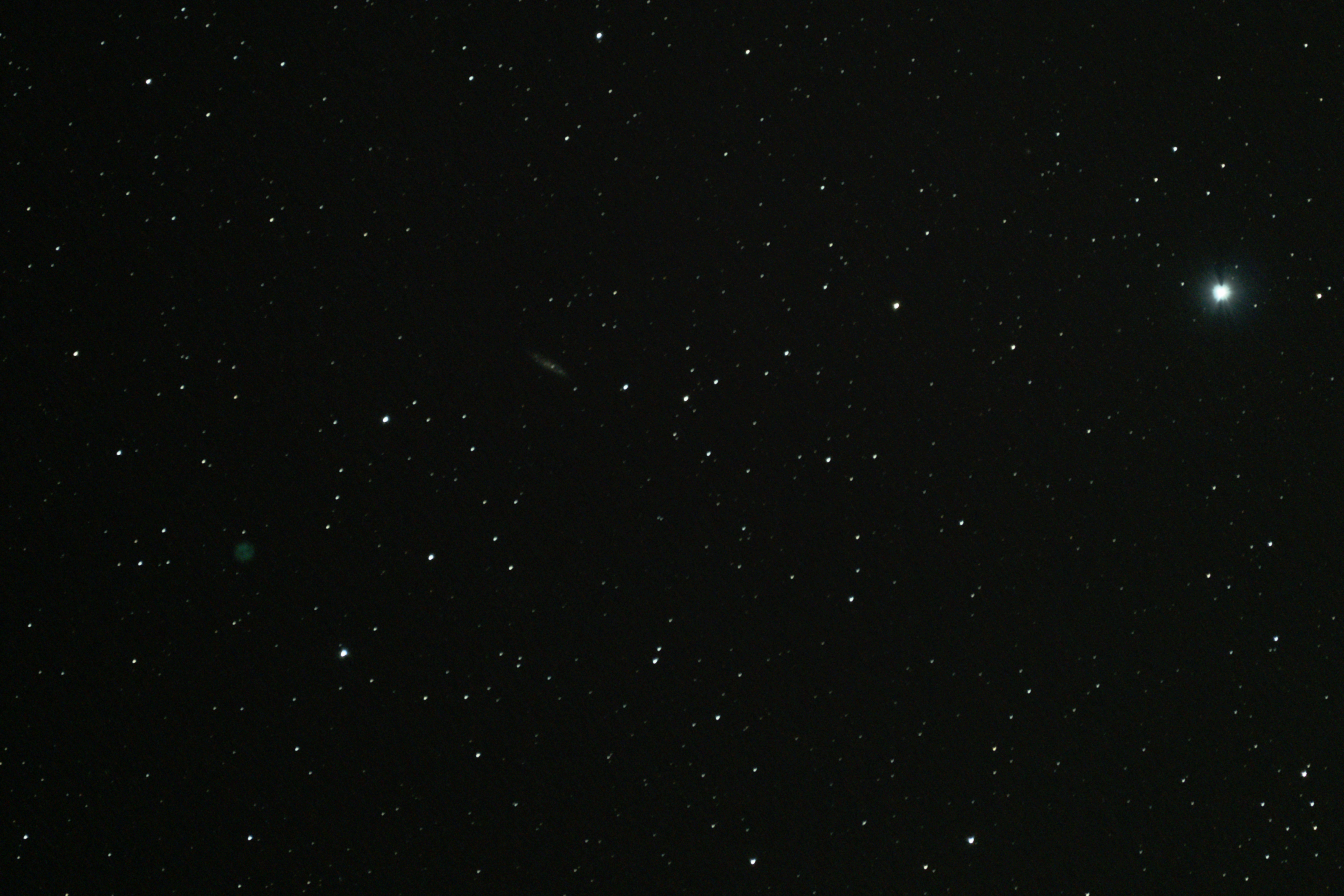
Merak, M108 and the Owl Nebula
From Ursa Major to Virgo: A Galaxy Quest
Leading into tonight and after nearly 2 years, I had observed 71 of the Messier objects. The remaining 39 objects consisted of 3 Nebulae, 3 Open Clusters, 7 Globular Clusters and 26 Galaxies. It is those last galaxies that give me the biggest mental roadblock and there is no cluster of galaxies more daunting than those in the Constellation Virgo.
8:45 PM to 9:25 PM: Failure in Ursa Major
The evening was originally going to consist of objects in and around Ursa Major. I had a list of 6 targets planned but seeing conditions and light pollution only allowed me to view M106 in Canes Venatici. No other object would show a hint of detail. Frustrated, I noticed that most of Virgo had risen above my neighbors tree. I had not been planned on jumping into this daunting region of galaxies tonight, but thought it was worth a shot.
9:35 PM to 10:45 PM: A Surprisingly Pleasant Trek through Virgo
Starting in the northern portion of Virgo led to initial discouragement with objects such as M96, M85 and others not showing up. At this point, I was starting to become frustrated. Of the 10 objects I had attempted to observe thus far only 1 had been visible. For all others, the star patterns matched perfectly with my charts but where the galaxy should have been a dark void existed. At this point, I’m thinking I will have to go off site to darker skies for more Messier objects than I had bargained for.
I decided to give a few more attempts before calling it a night but this time started from the southern point of Virgo. To my surprise, two galaxies, M59 and M60 appeared in the eyepiece. Moving up Virgo, I used M89 as a central point to jump to M90 and M58. Star hopping took me to M87 and then up to Markarian’s Chain, M84 and M86. One final sweep through Virgo revealed M88. With Ursa Major a bit higher in the sky and observing conditions improved, I moved back over and was able to catch M102 before concluding the night.
Galaxies such as M88 and M90 at +9.36 magnitude were pushing the limit of what I was comfortable verifying as observable targets through my skies. Using 96x magnification and averted vision helped with these observations. Others such as M87 were surprisingly easy to view. Depending on the size and surface brightness of the object it appears the limits of my sky and telescope are around +9.5 magnitude. What I thought would be a nice evening in Ursa Major ended up being a surprisingly productive evening in Virgo. It appears I’ve overcome my Virgo phobia.
11 more down…28 to go…

Before

After
Testing the Waters of Galaxy Hunting
The Constellation Leo
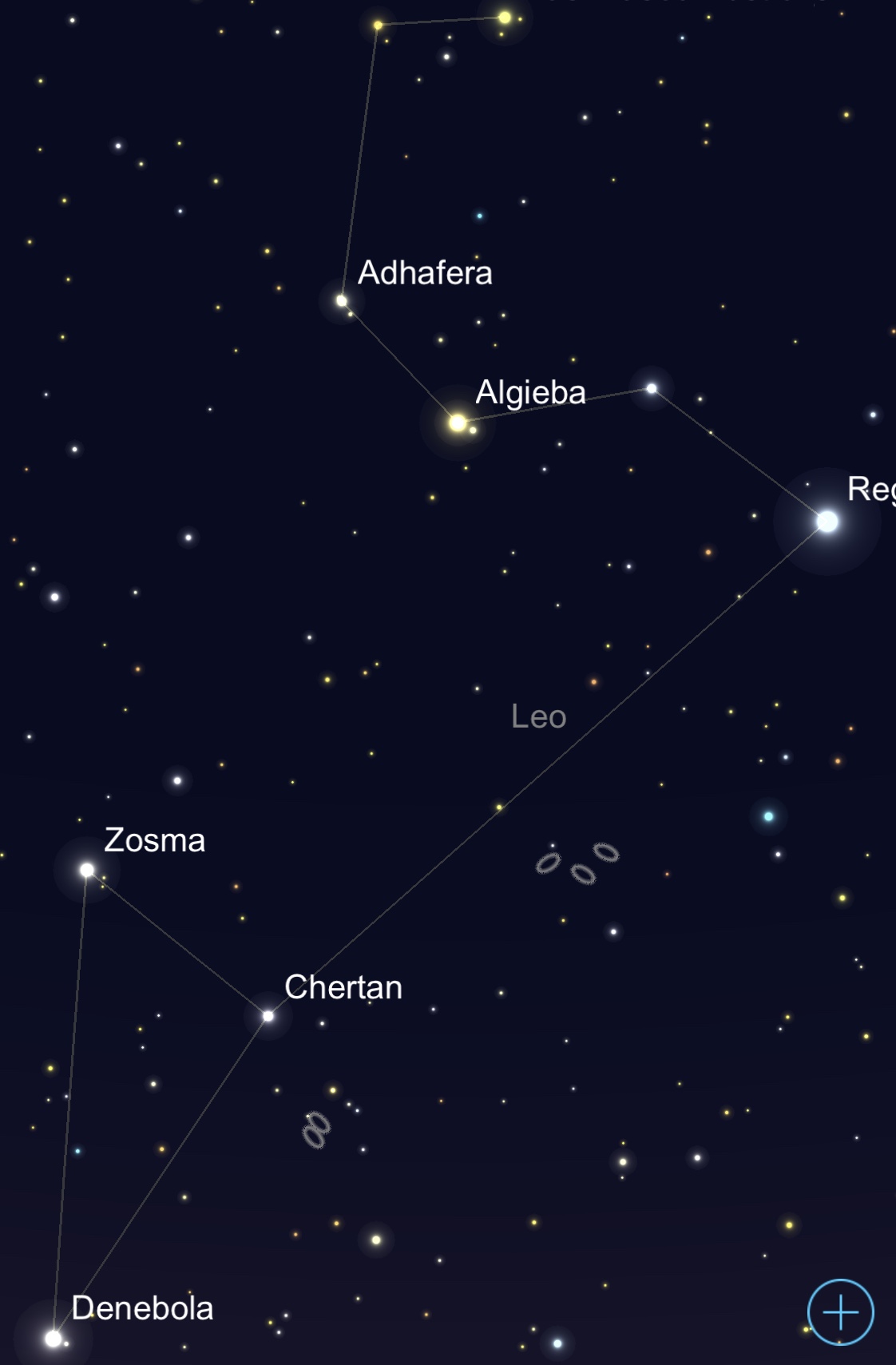
Upon completion of cataloging four constellations Saturday night, I realized that five galaxies needed for my Messier observing book lay in Constellation Leo. Galaxies have been quite frustrating from the confines of suburban skies. Yet, with a steady atmosphere and the Moon yet to rise, I thought an attempt at these wouldn’t hurt.
Star jumping from Chertan over to M65 and M66 left me pleasantly surprised as these two galaxies appeared prominently through my 8 in. dobsonian at 48x magnification. Being able to view these at +8.91 and +9.16 magnitudes excited me at the potential to observe other galaxies, from my location, in the Messier catalog.
This led me to test the limits of observing magnitudes even further. I star jumped, with much more difficulty, to M95, M96 and M105. Of these three objects, M96 appeared fairly easily as +9.13. I used it as the central point to verify the locations of M95 and M105. Of these three M95 at +9.72 was the most difficult to spot, pushing the upper limits of what I could view.
A few things helped with observations this evening:
#1: My eyes were dark adapted fairly well for a suburban neighborhood.
#2: It was an exceptionally clear and steady night with seeing conditions being very good and transparency at a level 6.
Up next for the Messier catalog will hopefully be 5 galaxies and the Owl Nebula located in Ursa Major.

An Easy Pair to View

The Difficult Trio
Photographing The 2019 Total Lunar Eclipse
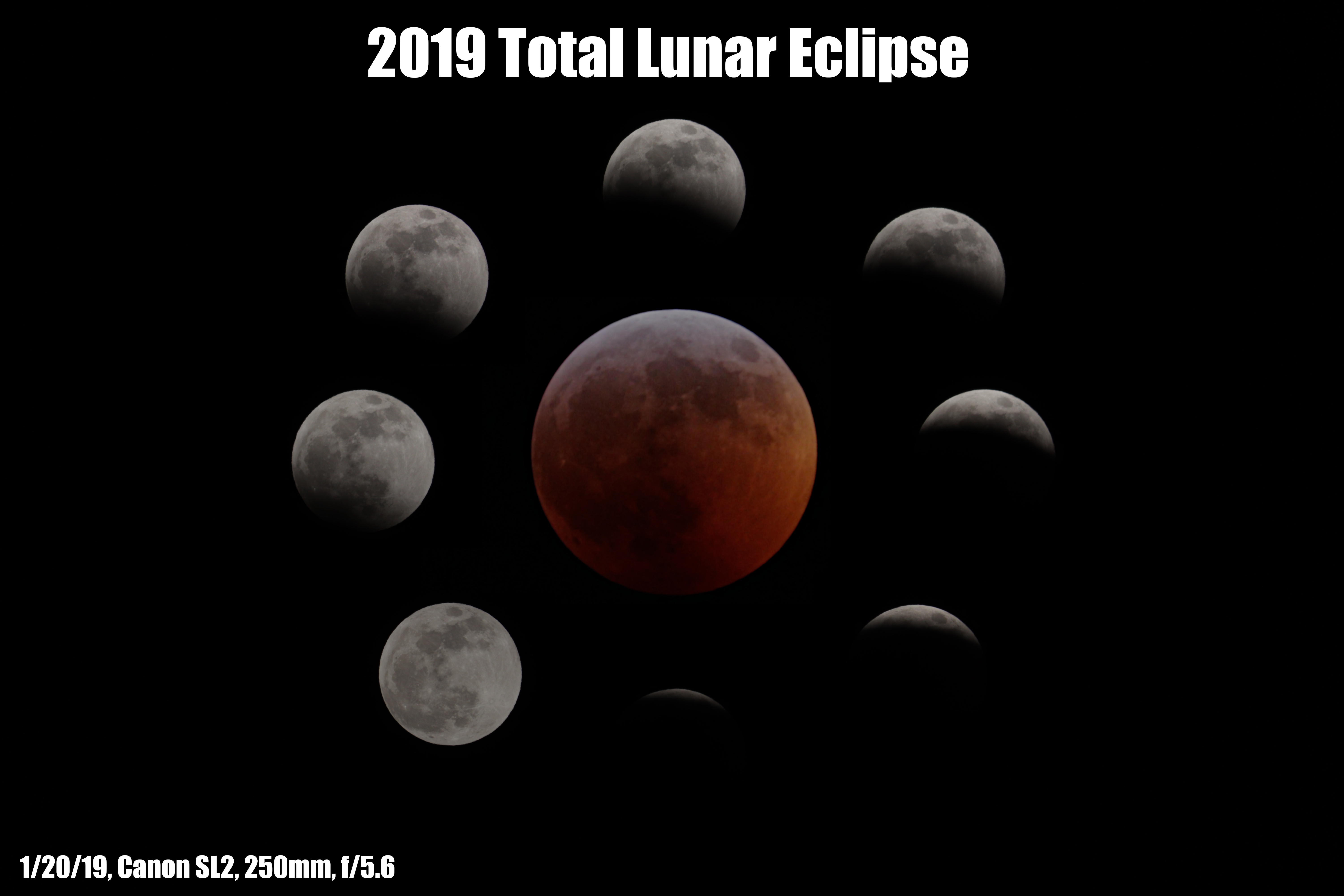
On a frigid night of 16 degree temperatures, I set up my telescope and DSLR to experience and document the 2019 Total Lunar Eclipse. Having just purchased a refurbished Canon 55-250mm f/5.6 lens, this was a prime opportunity to test out its abilities. Attaching the iPhone X to the telescope allowed me to stream various parts of the eclipse for others (mainly my students) to watch.
While that was going on, I manually focused the DSLR on the Moon at 250mm and snapped a couple dozen pictures from the beginning of the eclipse through totality. What began as a slowly creeping shadow across the lunar surface morphed into a dim red glow as the Moon moved into totality. As the Moon continued to dim the shutter speed and ISO were continuously adjusted to compensate. Shutter speeds varied from 1/1000 to 1 sec and ISO ranged from 100 to 800 from Full Moon to the dimmest point of totality. Through my excitement, I had forgotten how cold it was and started to feel a tingling pain in my toes that made me quickly call the evening to a close a little after midnight.
The next day, I began work on the following sequence of shots taken during the Lunar Eclipse. The image of the Blood Moon was doubled in size through editing and this collection of shots was put together using GIMP 2.10.
Solar Observing Coming to Late Night Astronomy
With the addition of the Celestron EclipSmart Solar Telescope, I will begin studying the Sun. Look for a written or video review coming soon… 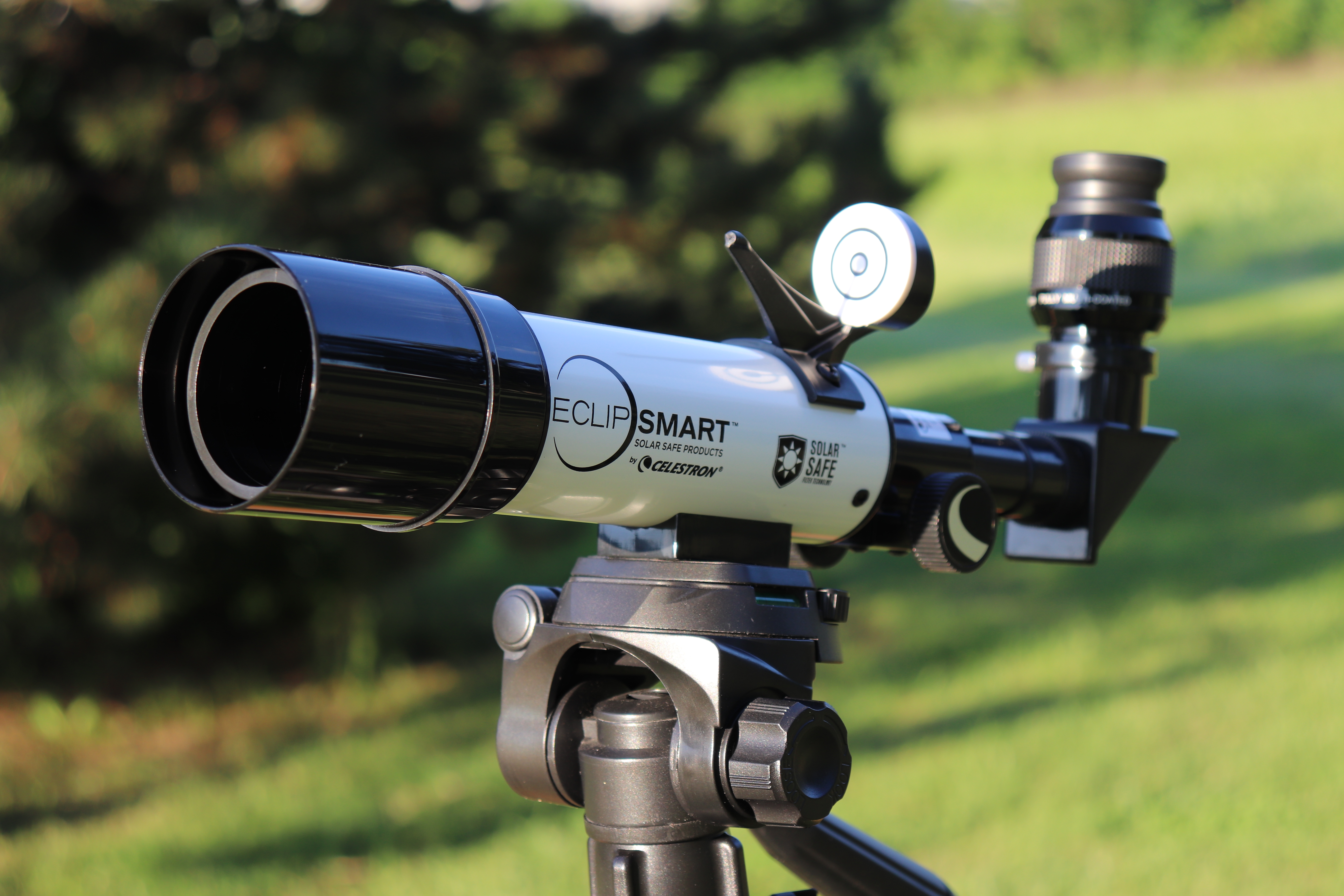
Lauren practices safe solar viewing for herself and our daughter.
What a wonderful mother!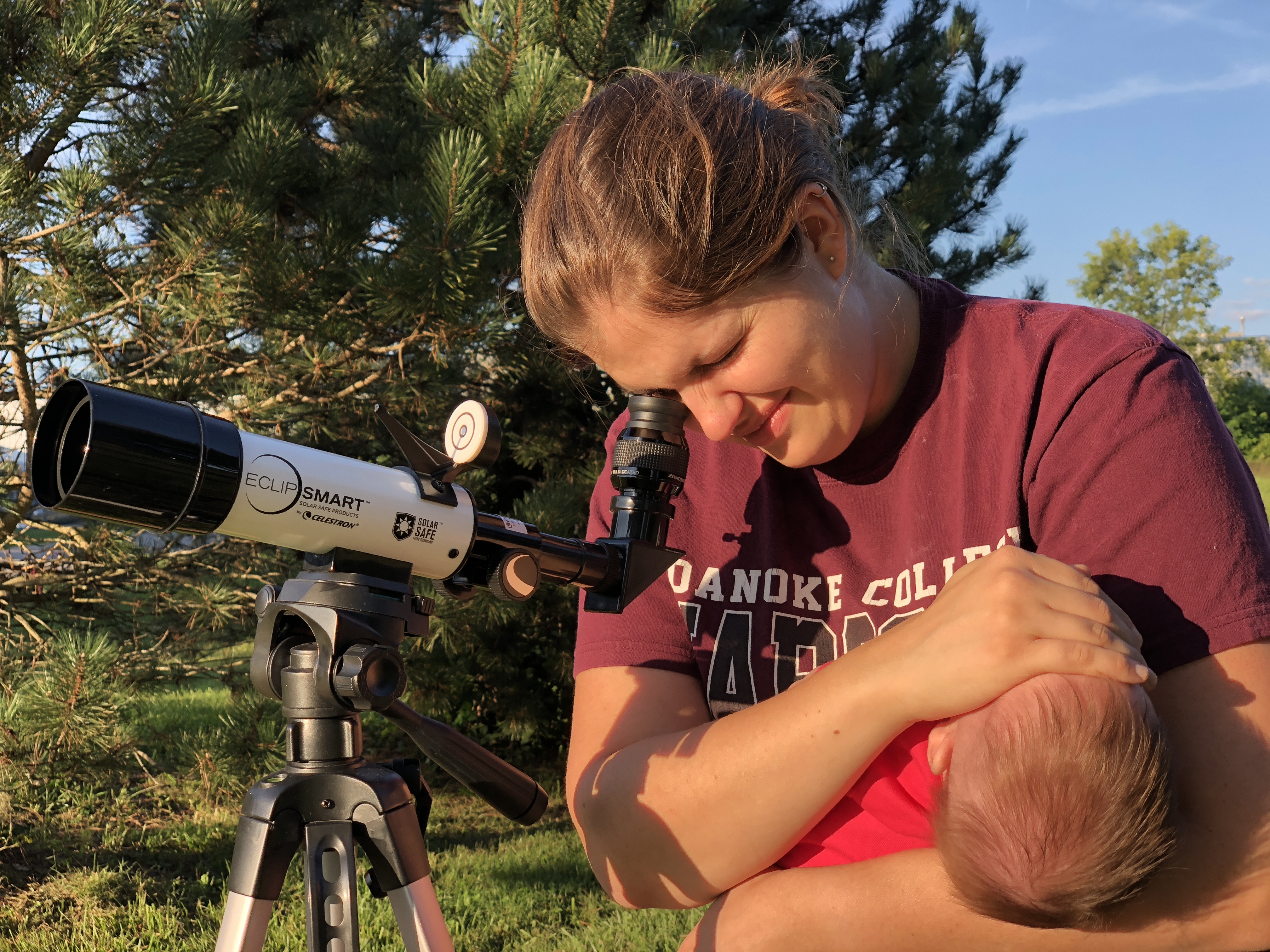
A Big Dent in the Messier List
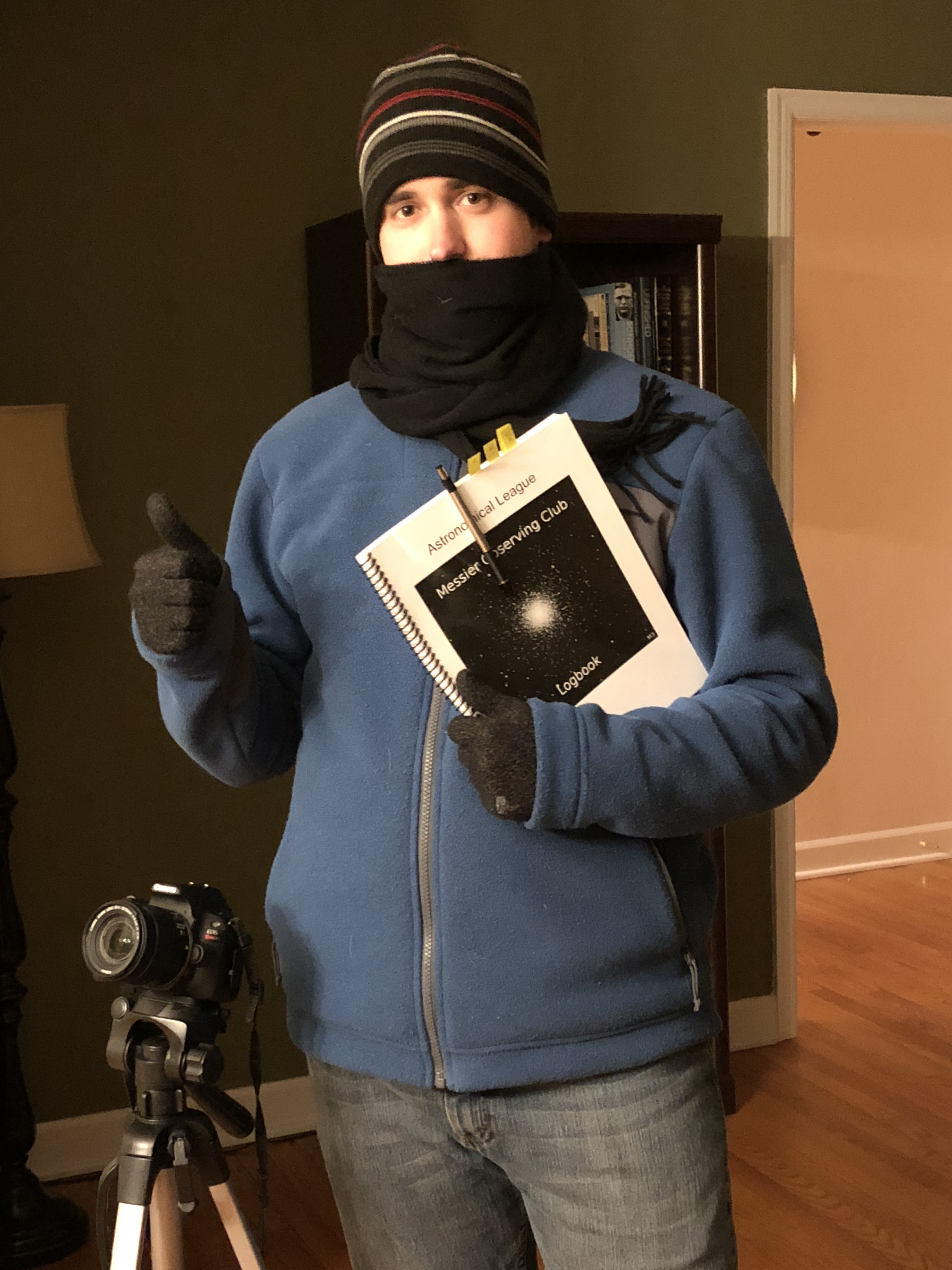
GQ’s 2018 Man of the Year
An Unexpected Late Night:
Being a teacher has its benefits. Snow days are definitely one of them. The call came in around 6:00 pm; school would be closed on Friday. I jumped up and ran out my telescope to cool down for an evening of observing. While that was occurring, I loaded up SkySafari 6 to plan out what Messier targets I would hunt down on this crystal clear and moonless night. What followed was a wonderful, if a bit cold, late night.
Early Evening: 6:00 pm to 6:30 pm
After setting up the telescope, I took the DSLR to get some images of the waxing crescent moon about to set near the horizon. Messing around with the settings, I attempted to capture the “Old Moon in the New Moon’s Cradle”, or the Earth’s shine reflecting off the dark surface of the Moon.
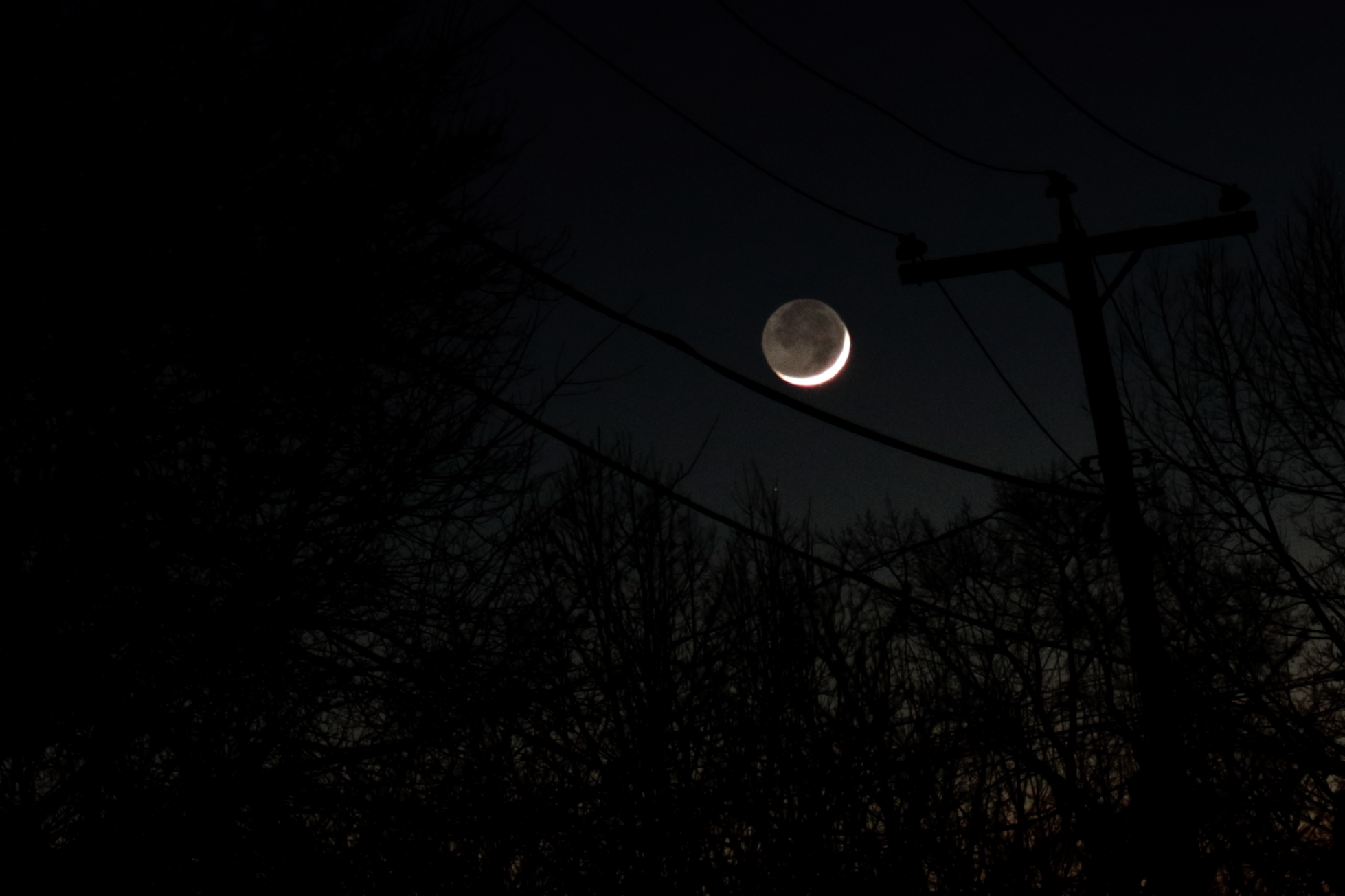
Earthshine off of the Crescent Moon
A Frustrating Start to the Night: 8:00 pm to 8:30 pm
The first three targets of the night were M74, M33 and M77. Of those three, I was only able to view M77, due to light pollution and the low surface brightness of M33 and M74. I will have to find a darker sky location to view them in the future.
Later in the Night: 11:00 pm to 12:00 am
Heading back out, I was met with temperatures in the low 30’s and a crystal clear evening. The telescope had fully cooled and there was little to no wind. I began by focusing on some open clusters in the Constellation Auriga that were a bit difficult to find. At first, I mistook M36 for M38. Silly Me! Once I sorted them out, M36 had interesting star formations that shoot out in straight lines. Moving down to M37, I witnessed a nice dense star cluster that was best viewed through my low power 2 in. eyepiece. The Starflish Cluster, M38 was an interesting site and clearly gets its name from its star pattern. Jumping over to M1, the Crab Nebula is always a disappointment to me, appearing as a dim blob in space. M35 was nothing of distinction but was easy to find from the Crab Nebula, and I caught a glimpse of the small globular M79 before loosing it to the treeline and more heavy light pollution. After this, I took a few shots of the Auriga Constellation to see if my DSLR could pick of any of the star clusters I had just viewed and went inside to warm up.
Early Morning: 1:00 am to 2:30 am
After an hour of warming my feet, it was back outside for another hour of observing. While inside, I decided to focus my attention on some old favorites to end the night. Back outside, I first viewed M44, the Beehive Cluster, which has some beautiful triangle patterns. I was very impressed by M67. It appeared to be layered in terms of its detail, with the brightest stars coming to the forefront at lower magnification and a somewhat cloudy layer of dimmer stars showing up at higher magnifications. M48 wasn’t much in terms of detail but was easy to find. Finally, I ended the night of with two old favorites, M81 and M82. I remember the first time I viewed these several years ago. The way in which they float in space together with their odd pairing of shapes and high surface brightness is a wonderful view. With that, I had tracked down 12 more Messier objects with 75 left to go.
One Last Thing:
As I was packing up, I set up the DSLR for my first attempt at a long exposure shot of Polaris. My hope was to show star trails emanating from it. After making sure I was on the right star and setting focus, I set the camera to 55mm, f/5.6, ISO 100 and put the exposure to bulb. After starting the shot, I came back out about 15 minutes later and ended up with the following image:
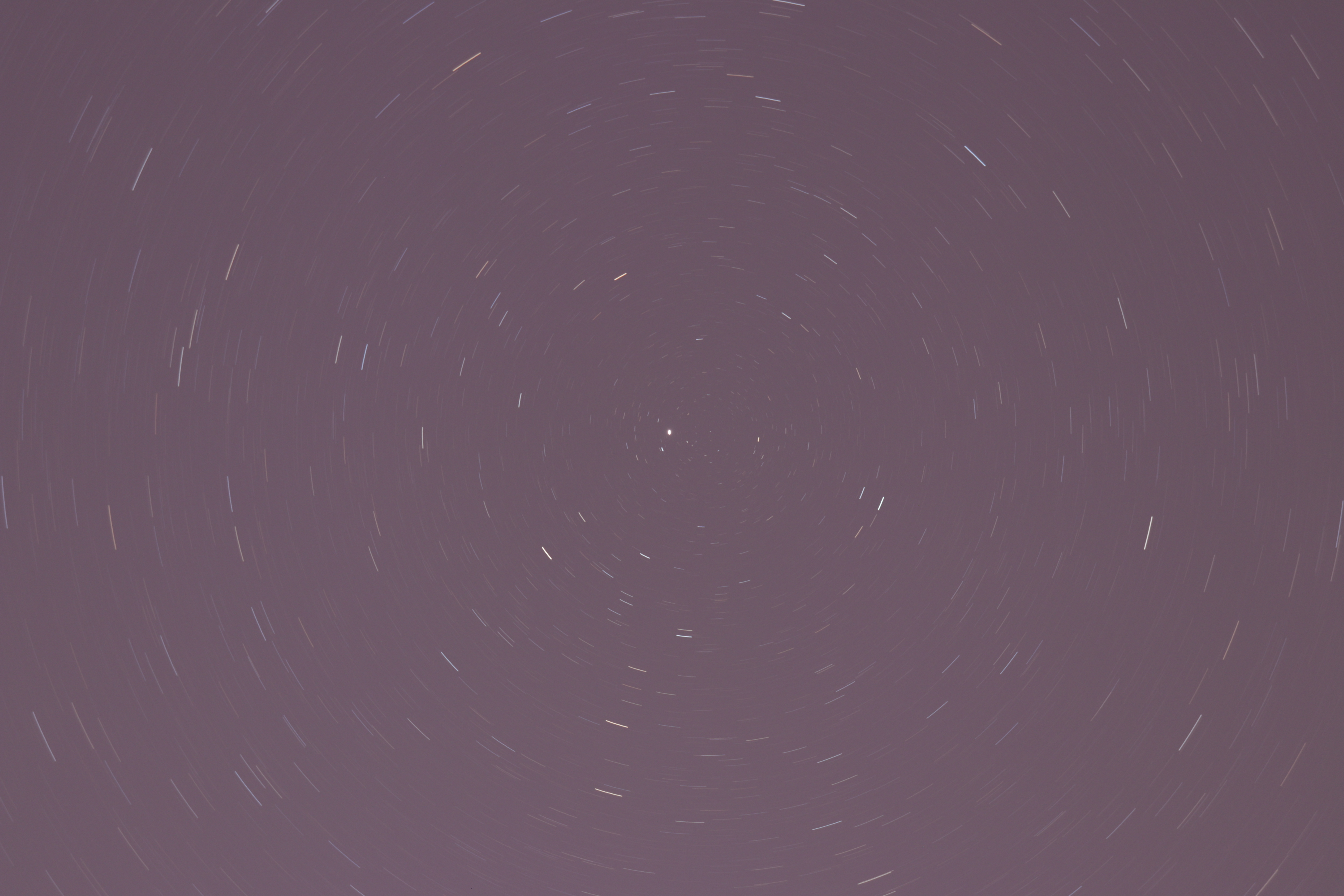
Following some post processing the next day in Canon’s Digital Photo Professional 4, I ended up with this final image:


