Later this year, Comet Leonard has the potential to be one of the greatest sites in astronomy. In this video, I’ll show you what parts of the sky Comet C/2021 A1 (Leonard) will be traveling through as it makes it’s closest approach to Earth on December 12, 2021. Be sure to let me know of your experiences viewing comets and hunting for Comet Leonard in the comment section below.
DSLR’s are wonderful to use for astrophotography. Whether you’re just getting into imaging by shooting star trails on a tripod or you’ve begun taking breathtaking pictures of deep sky objects with a tracking mount, DSLR’s are an impressive piece of equipment in amateur astronomy. Today, we’re going to look at the best camera settings that will help you maximize the quality of your nighttime photography with a DSLR
Step 1: Manual Mode & RAW
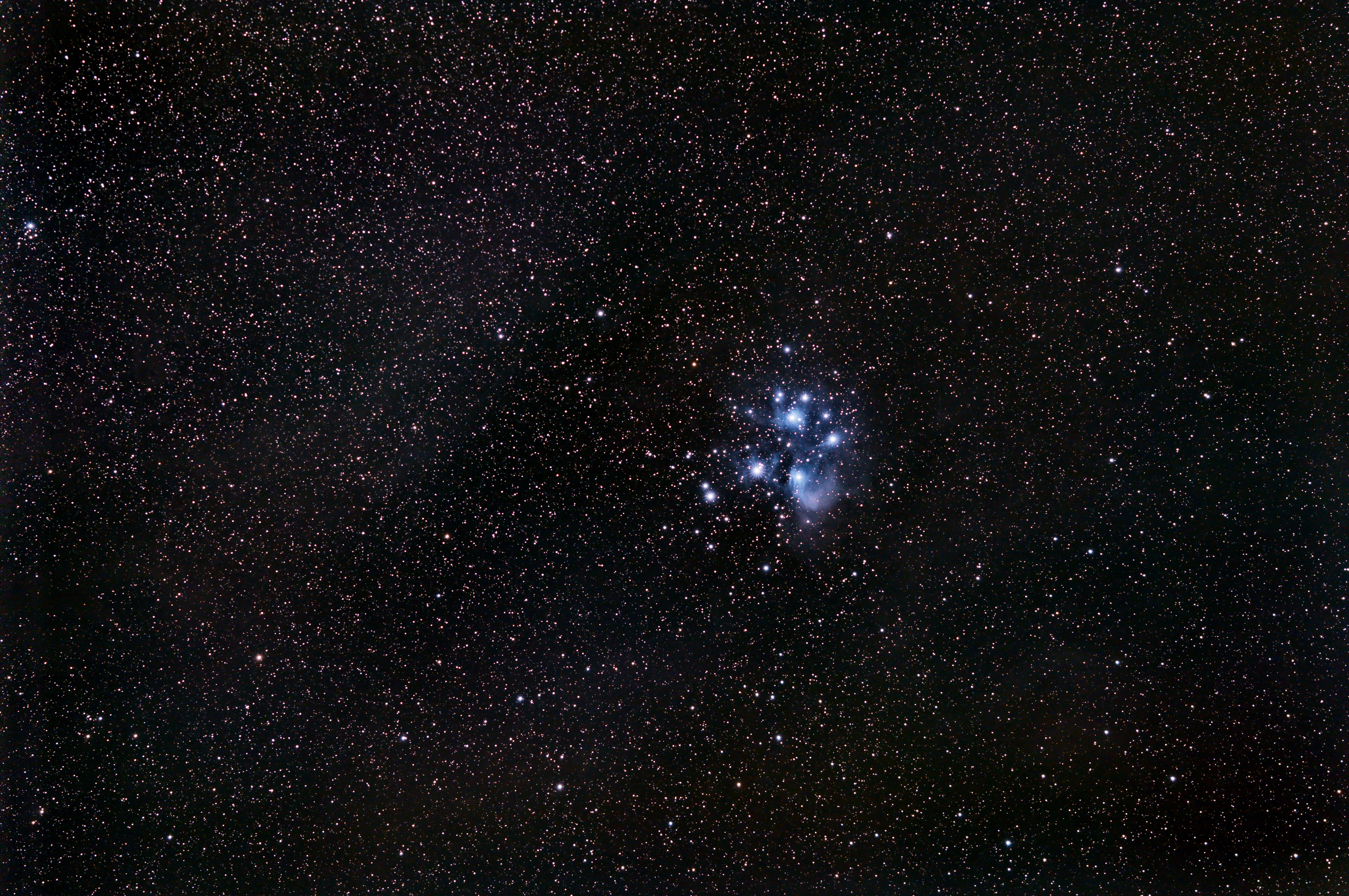
I’m currently shooting with is the Canon SL2 and while the menu system will obviously vary between companies and camera models the settings we are going to be discussing today should be fairly universal for most DSLR’s but always be sure to test things out for your camera before you get started with a long late night of imaging deep sky objects. Let’s begin by making sure your DSLR is in Manual Mode. This will give us the most flexibility with altering settings and controlling all aspects of how the camera is capturing our target. Once you’ve done that, go into the menu system and change your image quality to RAW. This is by far the most important setting in your menu to double check before each imaging session. RAW is such an important setting because of the amount of data it saves of the photons hitting your sensor. It’s sometimes referred to as a digital negative due to the large amount of data it saves. Increased information for variances in brightness, color and dynamic range will lead to more flexibility down the road for stacking and post processing when you are attempting to bring out the great dynamic range of a nebula like Orion or the subtle faint blue details surrounding the Pleiades Star Cluster.
Step 2: Various Menu Settings
Next, let’s go and change some other settings in our menu system and we’ll continue by setting our Picture Style to Neutral and White Balance to “Daylight”. These two settings won’t have an impact on the actual files being saved since we are shooting in RAW but they can have an impact on the histogram you will be analyzing when you are finalizing how to image your target when we get to that portion in a few minutes. We will also change our High ISO Speed to off. Since I plan to shoot dark frames later in the night, this feature is not needed. Another setting I like to disable is sensor cleaning. You will want the light, dark, flat and bias frames you will be capturing later in the night to be consistent and if your camera were to turn off and do a self-cleaning of the image sensor that could change any imperfections on the sensor from one shot to another. This will allow us to clean up those imperfections more easily with post processing. I’ve also found it good practice to have image review set to off and drive mode set to single shooting. Be sure to switch your camera’s lens to Manual Focus as well so you can fine tune the focus using the naked eye or something like a Bahtinov mask to assist you when imaging your target. Again, be sure to test these camera settings out because they can vary between brands and although things like shooting in RAW and using Manual Mode are universal practices other things may slightly vary in name or function but for my DSLR these settings have worked very well for me over the years!
Step 3: F-number
The final three settings we’re going to look at are the critical final steps before you begin capturing large amounts of data throughout the night for your target and they also vary greatly depending on your specific camera and lens. Let’s look at what you should consider when determining your DSLR’s F-number, ISO and Shutter Speed for deep sky astrophotography. Your options for F number will depend upon what lens you are using. The lower the F-Number the more light it will let in. More light is obviously good for capturing the night sky, but it may be a good idea to stop your lens down from let’s say f/2 to f/2.8 to sharpen the image a bit. Sometimes stopping down the F number can even be an artistic choice. Even though my Samyang 135mm F/2 can get sharp stars fully open at F2, I will often choose to stop it down to f2.8 because I like the spikes that come off bright stars from the blades of the aperture at that f number. I would suggest starting with your lens fully open and then do some test shots to check the focus from edge to edge of your frame and consider stopping down if you aren’t pleased with the initial results.
Step 4: ISO
Next, we need to figure out the ISO to use for our DSLR. Now, how to exactly describe what the ISO does to the sensor of a DSLR is a complicated topic that I would like you all to help me with in the comment section below. I’ve always thought of changing the ISO as adjusting the sensitivity of the sensor. This doesn’t magically allow your camera to collect more light and increasing the ISO too much can negatively impact the dynamic range of your final RAW image. Also, ISO settings affect DSLR sensors differently, so this isn’t a one size fits all setting. Simply put, I have experimented with my camera’s ISO settings ranging from 100 to 1600 ISO imaging a wide variety of deep sky targets and have found my cameras sweet spot to be ISO 400. Anything higher and I tend to lose too much dynamic range when I go to processing and anything less can leave streaks and banding effects from the sensor itself. Experiment with this and do some additional research for your specific DSLR to find out if others have discovered what works best for your sensor.
Step 5: Shutter Speed
Lastly, we need to figure out what to set our shutter speed at so photons can fill up our sensor and create beautiful images of the nighttime sky. This will depend partially on what additional equipment you own. Are you shooting on a tripod, a smaller mount like the Sky Guider Pro or have you invested in a couple thousand dollar tracking mount? For the benefit of this video, let’s assume you are testing the waters of astrophotography and have a tripod or entry level mount like the Sky Guider Pro I own. For a tripod, go out and shoot some beautiful star trails. Point to a part of the sky, adjust your focus and experiment with how long you can keep your sensor open to get different effects from the star trails. Play around with what your camera can do and try to find Polaris to see how much it does or doesn’t move compared to the other stars in the sky. A nice tool to mention real quick that doesn’t cost that much money is a remote shutter release trigger. The one I own allows me to set the shutter speed of the camera and how many pictures I want it to take. Connect it to the wire remote port on your DSLR type in your settings and you can head back inside for a bit while the camera works its magic imaging the night sky. For those of you with a polar aligned tracking mount the decision of shutter speed becomes more exact. With your F-number already set on your lens go outside and do some test images at various shutter speeds and ISO’s if you haven’t determined if your camera has an ISO sweet spot. For this example, I’ve adjusted my camera to every menu setting mentioned in this video, set my lens to F2.8, ISO to 400 and have taken 15 second, 30 second, 45 second, and 1 minute exposures. To determine what exposure works best, I’m going to press the info button to see the difference in the histogram for each image. The trick is to get a histogram that is about 3/4 of the way over to the left. Too far to left and you don’t have enough difference between your object and the background of space, too far to the right and you may lose some of the brightest details of your object from the data getting clipped off. This again, will be something you will need to experiment with depending on your lens, ISO and the maximum practical exposure length that your tracking mount is capable of. Most of the image I shoot on my Sky guider Pro, with a 135mm Samyang lens at F2.8 and ISO 400 have an exposure length between 30 and 90 seconds depending on what I’m imaging, the light pollution of my area and what the histogram is telling me about the data I’m collecting for future stacking and post processing.
What DSLR settings work best for your camera for astrophotography? Please be sure to help each other out with questions and suggestions regarding all your different types of imaging equipment in the comment section below. Thank you all so much for your support and clear skies from late night astronomy.
Getting sharp focus is a critical and sometimes frustrating part of astrophotography. Even when everything is setup correctly, your equipment has cooled and the skies are steady, it can still be hard to tell if the stars in your frame are sharp or just little a bit off; and the last thing you want is to be disappointed with hours of imaging due to poor focus. Today, we’re going to look at a simple and affordable solution that takes the guess work out of focusing your telescope and lens. This miracle product, that almost feels like it should have its own infomercial, is called a Bahtinov Mask. Invented by Pavel Bahtinov back in 2005 this impressive device has helped me get sharp focus time after time.
Before buying the mask be sure to measure the diameter of your telescope or lens opening to make sure you get the right size. The mask that I bought is adjustable for an outer diameter between 65 and 100 mm which fits the lens hood of my Samyang lens. This specific Bahtinov lens only cost me about 12 dollars.
To get sharp focus with the Bahtinov mask, start by finding a bright star in the night sky, the brighter the star the better. Once you’ve settled on a star, place the mask over the aperture of your telescope or lens. When the mask is properly positioned on your equipment the bright star may appear as the outline of the mask if it is greatly out of focus. As you slowly begin to adjust focus, the three grid patterns that make up the mask will slowly form into a star with three diffraction spikes shooting out of it. Sharp focus has been achieved when the middle spike is perfectly centered between the other two spikes. I’ve found that the 10x digital zoom of my DSLR helps me to determine the positions of the diffraction spikes much easier.
I recently used this mask before imaging the Pleiades star cluster and it helped me to achieve sharp images of the seven sisters and the faint blue reflection nebula surrounding it. An important thing to remember is that even once you’ve achieved perfect focus early on, be sure to recheck it a few times throughout your imaging session as temperatures change during the night. Also, don’t forget to take the mask off before you begin you begin imaging. I may or may not have left it on once which led to some beautifully sharp stars with three spikes shooting through them. It was quite a unique picture, but not exactly what I was going for.
If you’ve used or are looking to buy a Bahtinov mask, please let me know how this brilliantly simple invention has worked for you or any questions you may have about it in the comment section below. Thank you all so much for your support and clear skies from Late Night Astronomy.
Let’s unbox, review and test this lens to find out why it is one of the best bang for your buck deals in astrophotography! I’ll walk you through all this incredible lens has to offer as we go outside to test it with some deep sky imaging. If you own the Samyang or Rokinon version of this lens please let me know about your experience using it and what your imaging in the comment section below.
One important thing to mention off the bat regards the confusion over any differences between Samyang and Rokinon lenses. From what I’ve read, the 135mm f2 versions of each lens are identical. The difference in their names simply comes down to a marketing decision. If both are available to buy where you live, do what I did and go with the cheaper one, that ended up saving me about 20 dollars for this the Samyang model.
When researching what lens to buy for astrophotography, there were several things that led me to this Samyang Lens. One of which was its low F number. At F/2, this has a very large aperture which lets in a tremendous amount of light, leading to fainter objects showing up under ideal imaging conditions and shorter individual exposure times needed to collect light for stacking and post processing. The true beauty of this lens comes from the fact that even shooting at F2, you can still get incredibly sharp images across the entire field of view and that’s not always the case for lenses.
The second thing that sold me on this lens was the fixed 135mm focal length. Prime lenses that don’t zoom often lead to sharper results for astrophotography due to the design of the lens. 135mm is also a nice sweet spot for my current tracking mount. At a little less than 2 pounds, its light enough for my Skyguider Pro and the amount of sky that it can image will reveal faint details of impressive deep sky objects but also doesn’t push the limits of what my tracking mount is capable of in terms of its tracking accuracy at long exposure times.
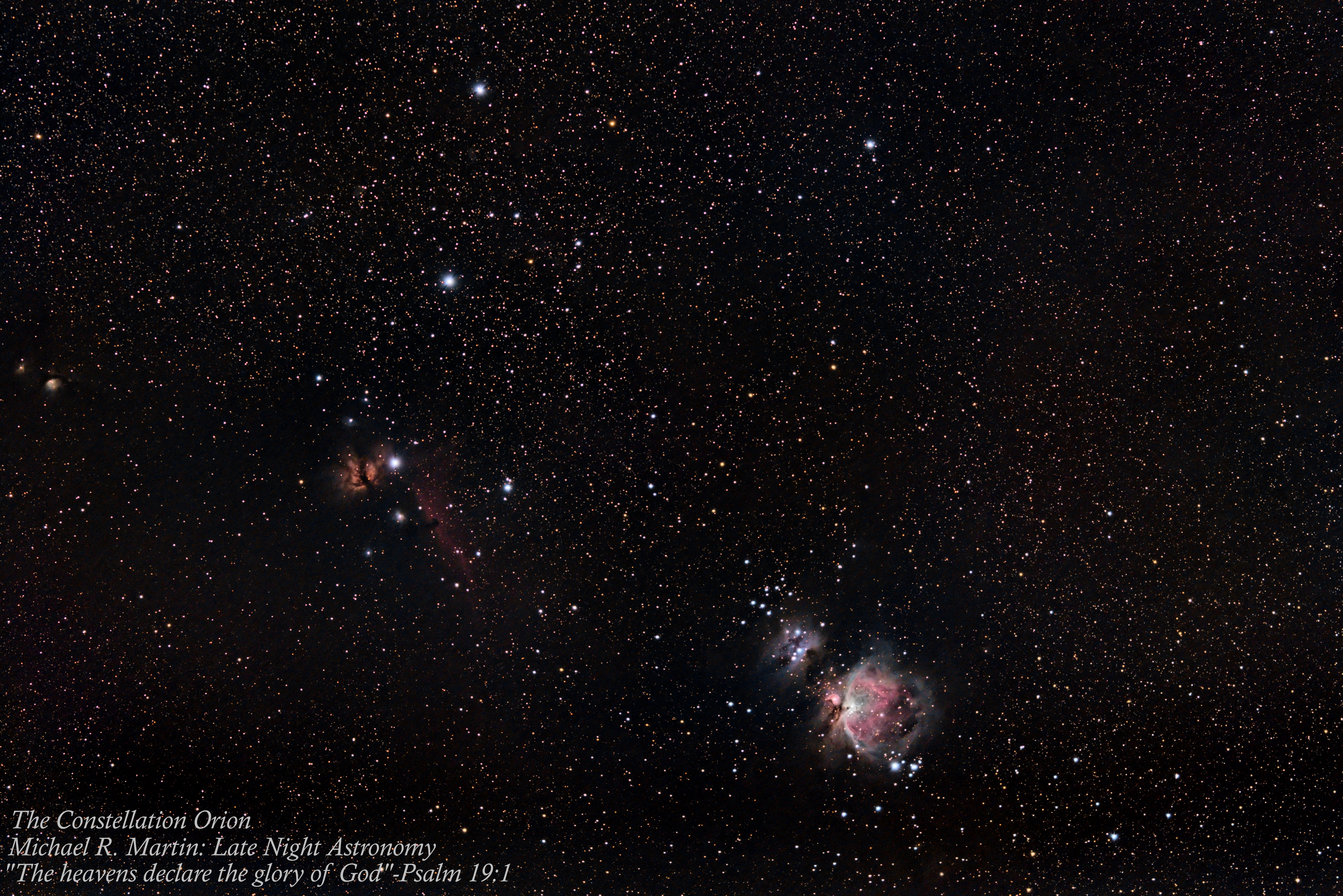
Few things test a lens like imaging the nighttime sky with its pinpoint stars and faint deep sky objects, so let’s put this lens to the test and see if it’s impressive claims match up to the real-world rigor of astrophotography by imaging the Constellation Orion. Now the detail of your images will vary from mine due to things like light pollution, exposure times and post processing but the thing I really want to point out is the sharpness of this lens, fully open at F2. From the Flame and Horsehead nebulas near the bright star Altinak, to the Orion Nebula with its nursery of dynamic gas clouds creating stars all the way over the extreme edge of the image where faint stars shine bright, this lens remain as sharp as the center of the image across the entire field of view. The Samyang 135mm F/2 easily lives up to its hype and should be near the top of your list of purchases if you are new or experienced in the field of astrophotography.
If you’re using or are looking to buy the Samyang or Rokinon 135mm F/2, please let me know what you’re imaging with it or any questions you may have in the comment section below. Thank you all so much for your support and clear skies from Late Night Astronomy.
I’ll walk you through the best views of the Moon, Planets and Deep Sky objects like the Orion Nebula this winter. Regardless of your equipment or experience, we’ve got something here for you to see in the night sky. Please let me know what you’ve gone out see this winter with your telescope, binoculars or just the naked eye in the comment section below.
I’ll show you how find the Christmas Tree Star Cluster in the night sky. Made up of over 80 stars, it lights up the sky all winter long and is a treat to see through the telescope or image with a tracking mount.
As the great conjunction approaches I’ve got a live stream of Jupiter and Saturn getting closer and closer through my telescope. How are you planning on seeing this great event on December 21st.
Don’t miss the greatest meteor shower of 2020! In this video, I’ll show you how to see the Geminids and give some tips on ways to increase the number of meteors you can see! Be sure to let me know about your experience with the Geminid Meteor Shower in the comment section below. Clear skies everyone!
I’ll show you how to see the Great Conjunction of Jupiter and Saturn, also known as “The Christmas Star”. This rare event will be an incredible experience in astronomy that you won’t want to miss!
In this video, I’ll show you how to quickly find Polaris and use it to polar align your tracking mount for a great night of astrophotography. What equipment do you own for astrophotography? How do you go about achieving polar alignment? Please let me know of any tips and tricks you use in the comment section below!